


TL;DR
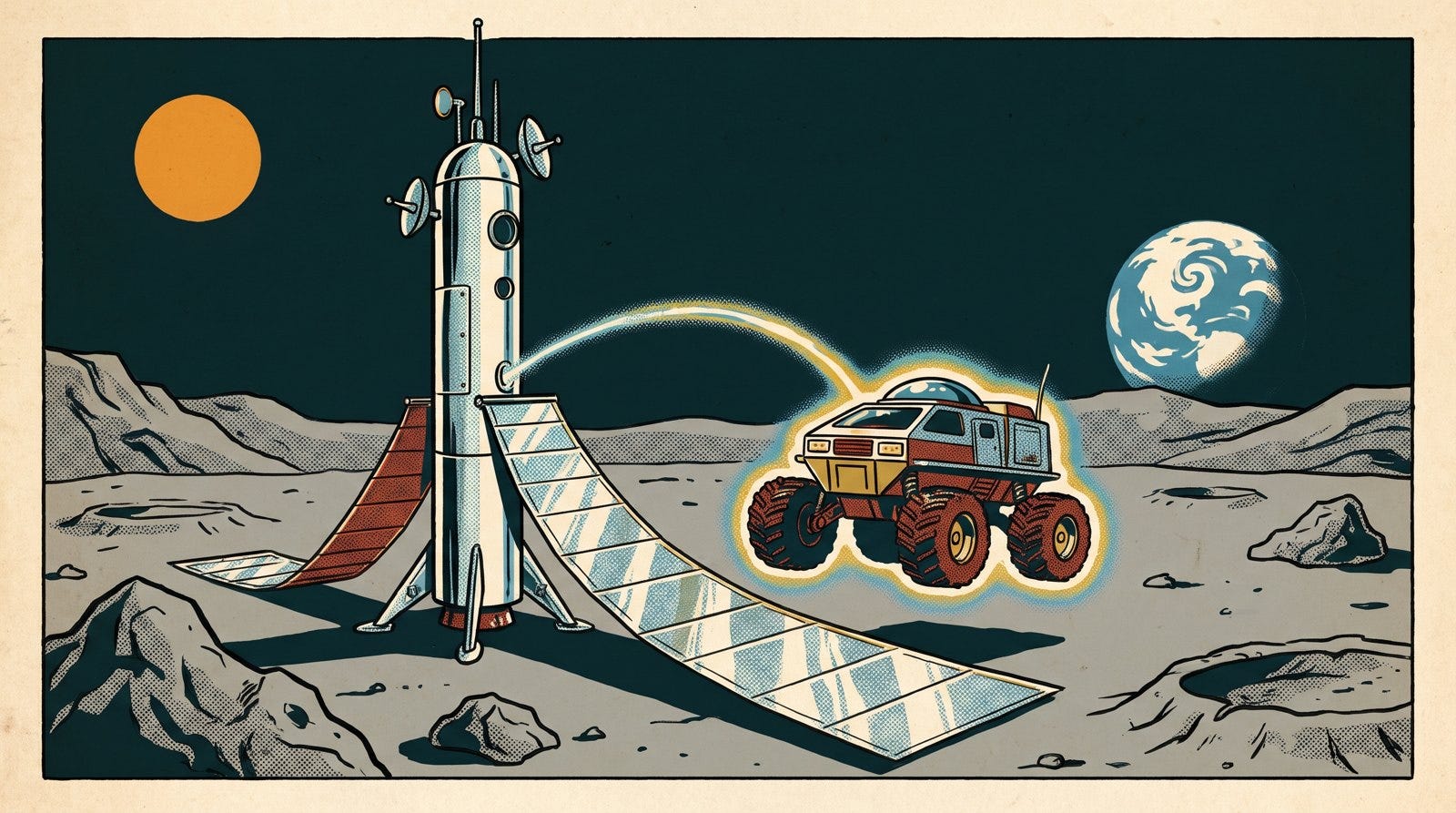
A Moon base runs on electricity before it runs on anything else: air, heat, radios, rovers and the machines that will one day dig ice for water and fuel. NASA has now ordered what Payload calls its first test of how that power could be made, stored and delivered for crews at the lunar south pole. Redwire will supply solar arrays that roll out like a window shade and pull back in when a rocket lands nearby, to keep the dust it kicks up off them. Yank Technologies will beam power across a gap with no cables, and Honeybee Robotics, a Blue Origin company, will supply energy storage. Together they form a small tower called miniCAST, short for Mini-Communications and Solar Tower. It is a prototype order, with no award values or test dates reported yet, and it sits beside a nuclear rover and a planned reactor that would carry the base through the two-week lunar night. On Sunday NASA also lined up the base's delivery trucks and a nuclear rover to dig for ice (our story). To see our odds on when the Moon base switches on, and the timeline of breakthroughs that gets it there, subscribe.
Below the line, for paid subscribers: The full story: where it stands, how we got here and what's dated next; our labeled speculation on what it adds up to; and every source.