


TL;DR
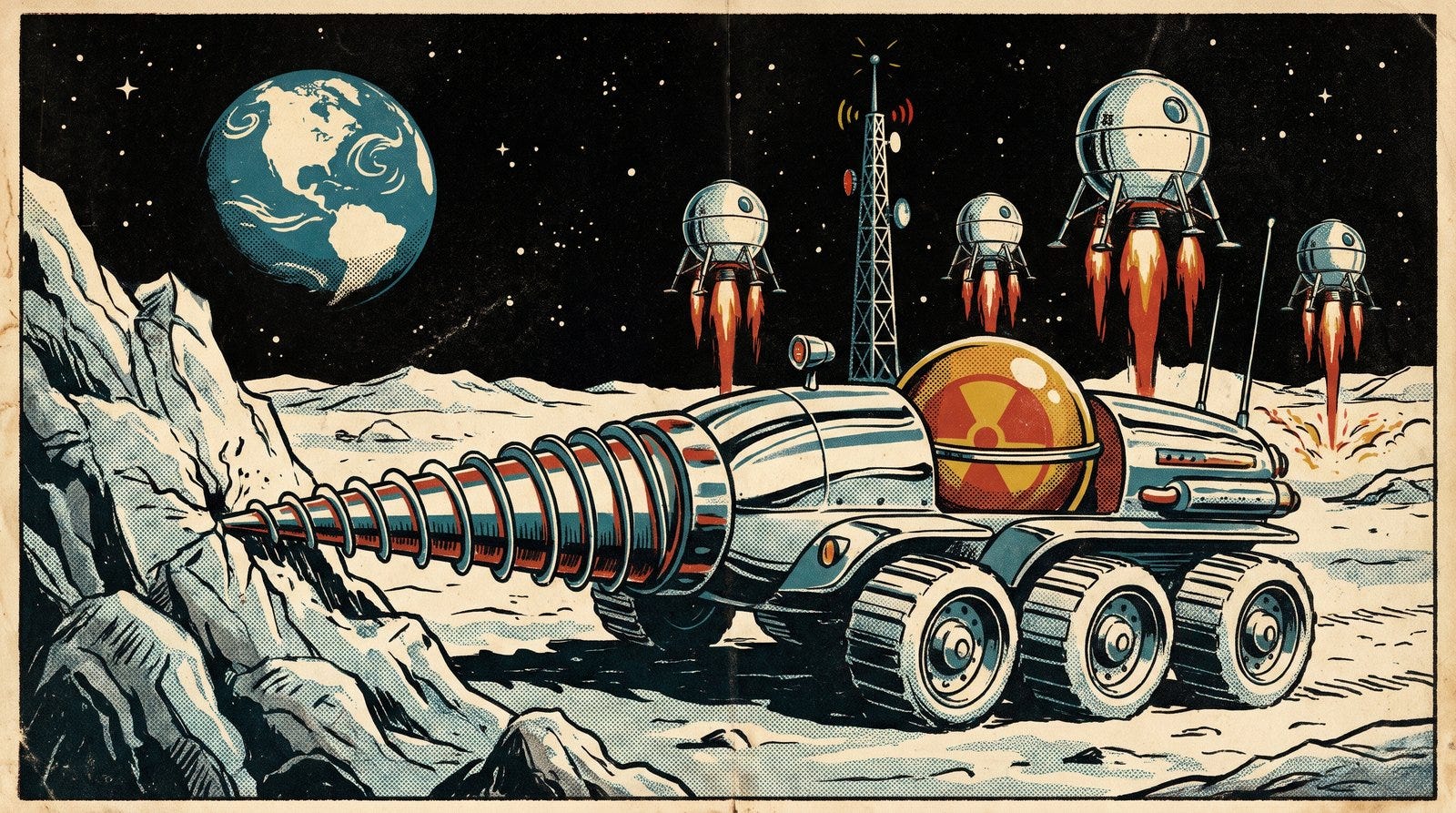
A Moon base where astronauts step off the lander and find the power, communications and science gear already set up is the plan NASA put money behind on Nov. 7. The agency qualified eight companies, SpaceX and Blue Origin among them, to compete for up to $10 billion in robotic Moon deliveries over 10 years, roughly $1 billion a year at the ceiling (worked out from those figures). It also picked Blue Origin to land PROMISE, a six-wheeled, nuclear-powered rover built from spare parts of the Curiosity and Perseverance Mars rovers, made to ride out the two-week lunar night and drill about 1 meter (3 feet) down for ice, with launch targeted for late 2028. A robot that keeps working in the dark and digs for ice is the kind of groundwork that lets astronauts arrive at a base already waiting for them. To see our odds on when the nuclear rover reaches the Moon, and the timeline of the breakthroughs that build the base around it, subscribe.
Below the line, for paid subscribers: The full story: where it stands, how we got here and what's dated next; and every source.