


TL;DR
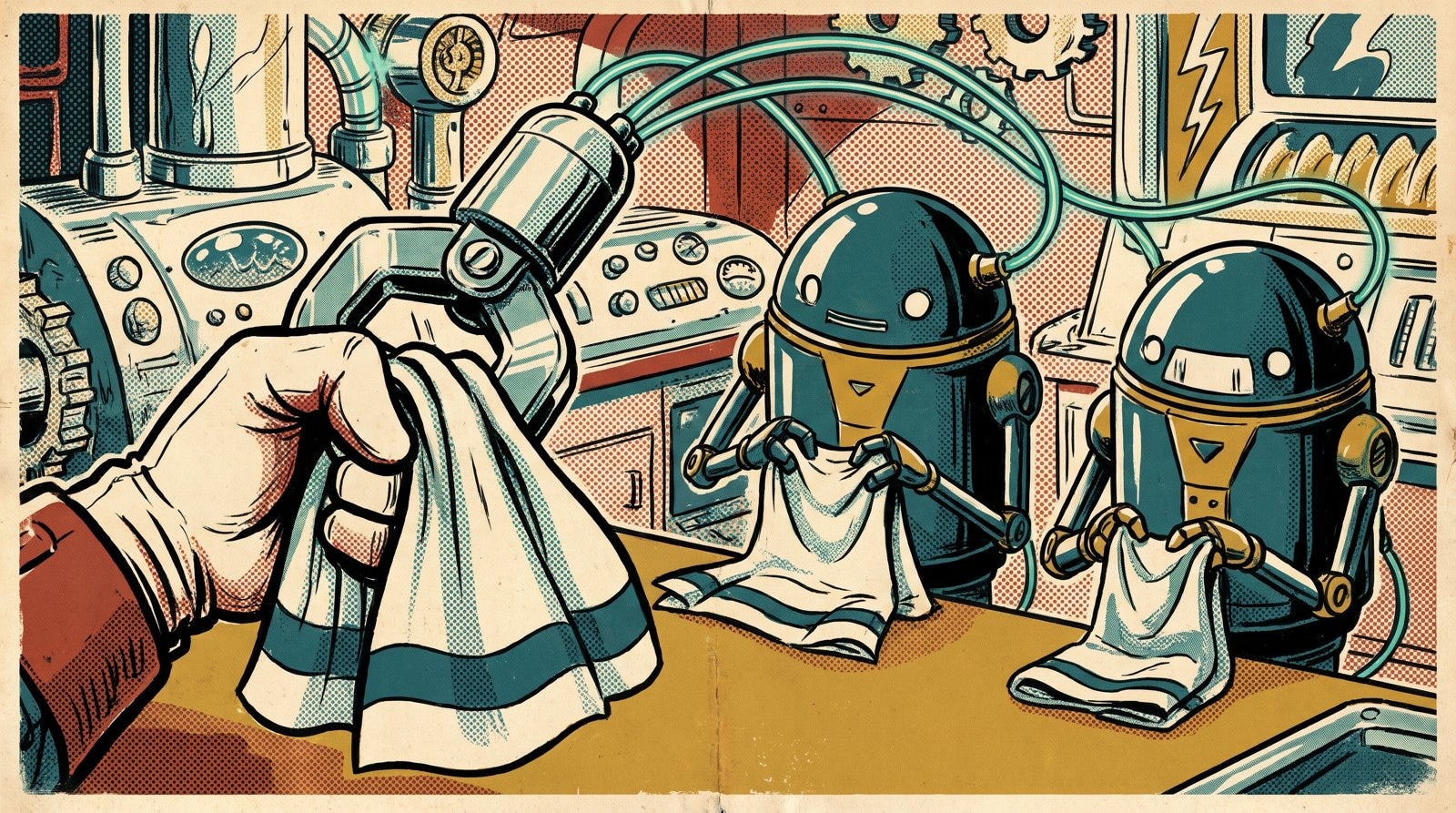
The expensive part of building a robot butler is the practice. Teaching a robot a chore has usually meant hours of a person steering a real robot by remote control. A Japanese robotics consortium, AIRoA, has released a robot brain that learned from 16,151 hours of people working with a hand-held gripper, with no robot involved in collecting the data, and it ran four different two-armed robots through ten tasks such as folding a towel and re-zipping a pencil case. In the lab's own tests it succeeded 78% of the time on average, against 27% for the best of four rival models trained on the same data, and its weights are free for research. If people's hands can do the teaching, every workbench and kitchen counter becomes a classroom for robots. It follows a Beijing start-up's claim that its robot brain learned from 2.2 million hours of people on video (our story). Our odds that a home robot reliably does everyday chores on its own: a 75% chance it comes through, likely by 2030. For the full odds and the timeline of breakthroughs that leads to a robot that folds the laundry, subscribe.
Below the line, for paid subscribers: The full story: where it stands, how we got here and what's dated next; our labeled speculation on what it adds up to; and every source.