


TL;DR
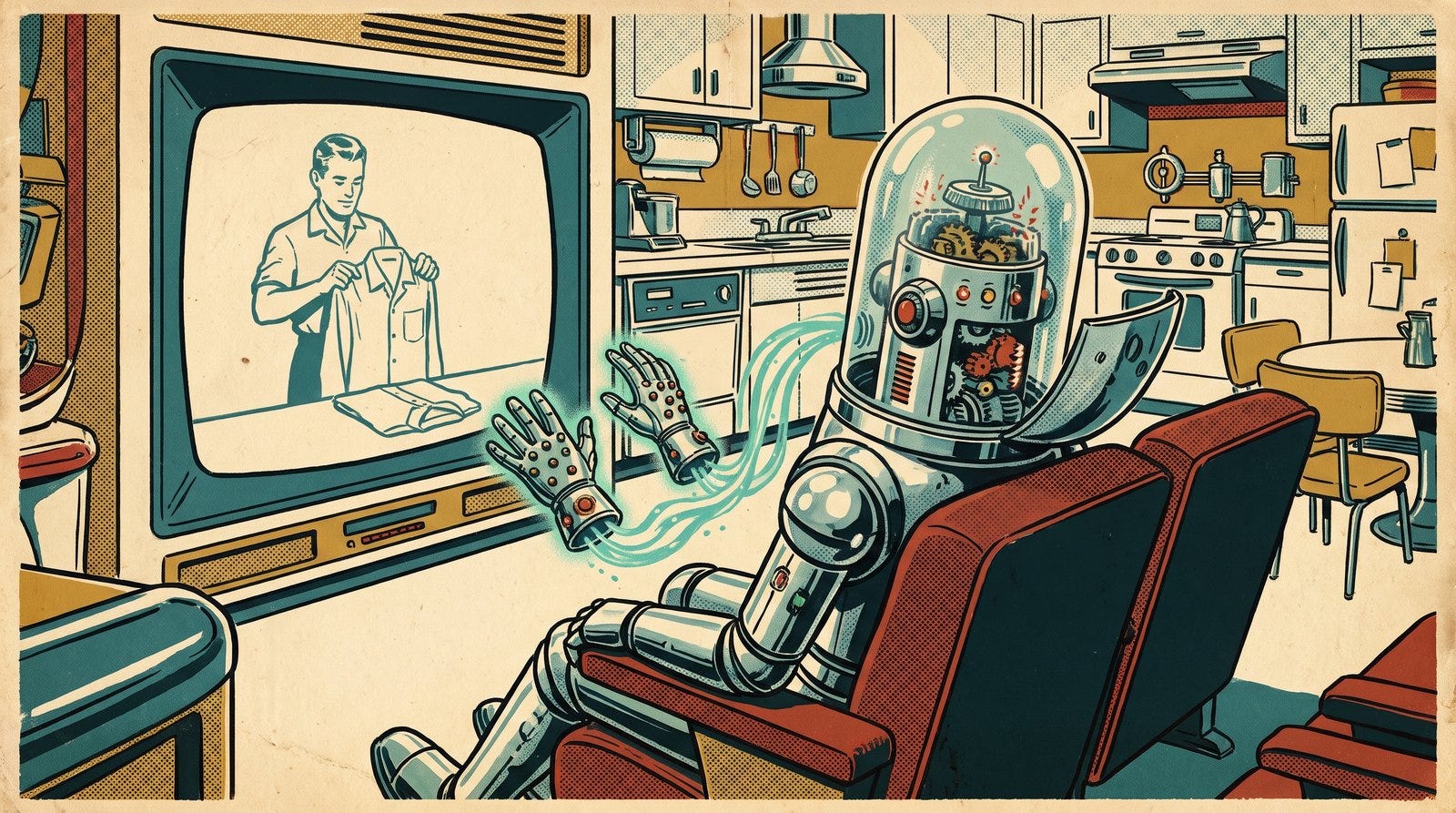
Teaching a robot a chore has usually meant paying a person to puppeteer it through the job, move by move. A Beijing start-up called LiberAI says it has found a cheaper teacher: the rest of us. Its new robot brain, Liber-0, learned mostly from more than 2.2 million hours of video of people going about ordinary activities, plus data from gloves that track human hands. The company says it then succeeded at 36% of 60 tasks it had never seen, about 22 of them, and that a quarter of the usual robot demonstrations plus the glove data beat a version trained on robot demonstrations alone. Every figure is the company's own, carried in a trade write-up. If the recipe holds, the practice data a home robot needs could come from people doing their own chores in gloves and cameras, which would make a robot butler far cheaper to train. Our odds that a home robot reliably does everyday chores on its own: chance it works 75%, likely by 2030. For the full odds and the timeline of breakthroughs on the way to a robot that handles the housework, subscribe.
Below the line, for paid subscribers: The full story: where it stands, how we got here and what's dated next; our labeled speculation on what it adds up to; and every source.