


TL;DR
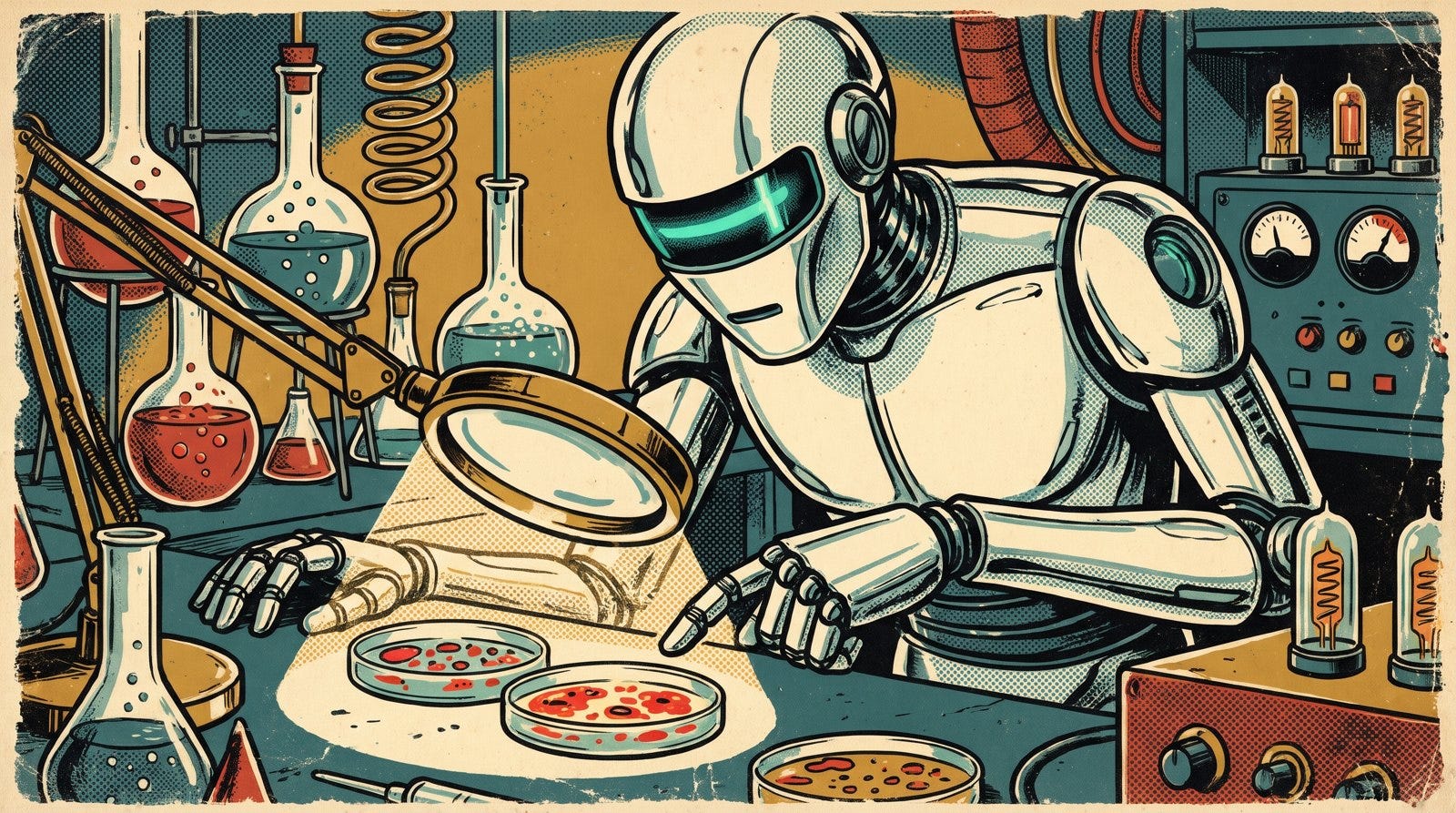
Before an AI can run a laboratory on its own, it has to do the humble part of a scientist's day: read a smeared gel, count bacterial colonies on a plate, make sense of a microscope image or a messy instrument export. OpenAI built a 100-task test of exactly those chores, and its best model, GPT-6 Astra, scored 66.7%, more than double the 31.2% of a 2025-era model. Those figures come by way of a trade report on OpenAI's announcement, a secondary report, and the test is OpenAI's own. The models still make mistakes a trained hand would catch, and OpenAI says so itself. But the climb is steep and steady, and it is the climb toward labs that run experiments around the clock, the kind of engine that could one day speed up the search for new medicines. Earlier today we covered what that looks like in practice: AI agents ran a DNA lab for eight days from one typed request (our story). To see our odds on when AI agents run lab science on their own, and the timeline of breakthroughs that leads there, subscribe.
Below the line, for paid subscribers: The full story: where it stands, how we got here and what's dated next; our labeled speculation on what it adds up to; and every source.