


TL;DR
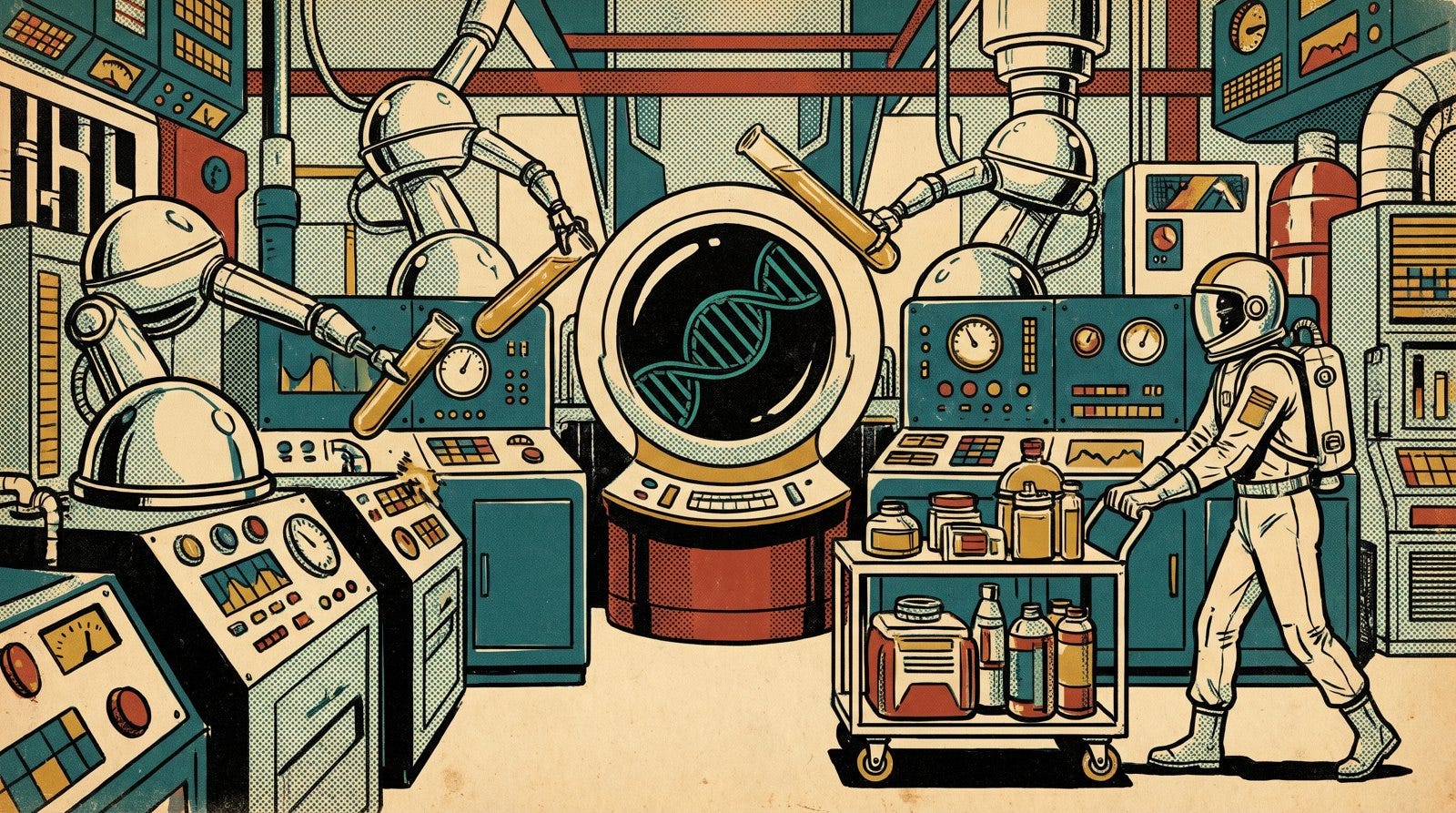
A team of AI agents in Shanghai took a single typed instruction and turned it into real DNA experiments, steering robot arms between more than 20 kinds of lab machines. The humans in the room had two jobs left: restock supplies and fix the hardware. Across four very different projects, the system worked faster than the usual approach, ran several experiments at once, and kept one job going for about eight and a half days without a single error in its result. It repeated results scientists already knew rather than finding something new, and that is exactly the first test a robot scientist has to pass. If labs can run around the clock on a sentence of instructions, the slow, hands-on half of science, the part between a good idea and a tested answer, could start to move at machine speed. That is the engine that could get new medicines found and tested faster. To see our odds on when an AI-run lab makes its first discovery of new biology, and the timeline of breakthroughs that leads there, subscribe.
Below the line, for paid subscribers: The full story: where it stands, how we got here and what's dated next; our labeled speculation on what it adds up to; and every source.