


TL;DR
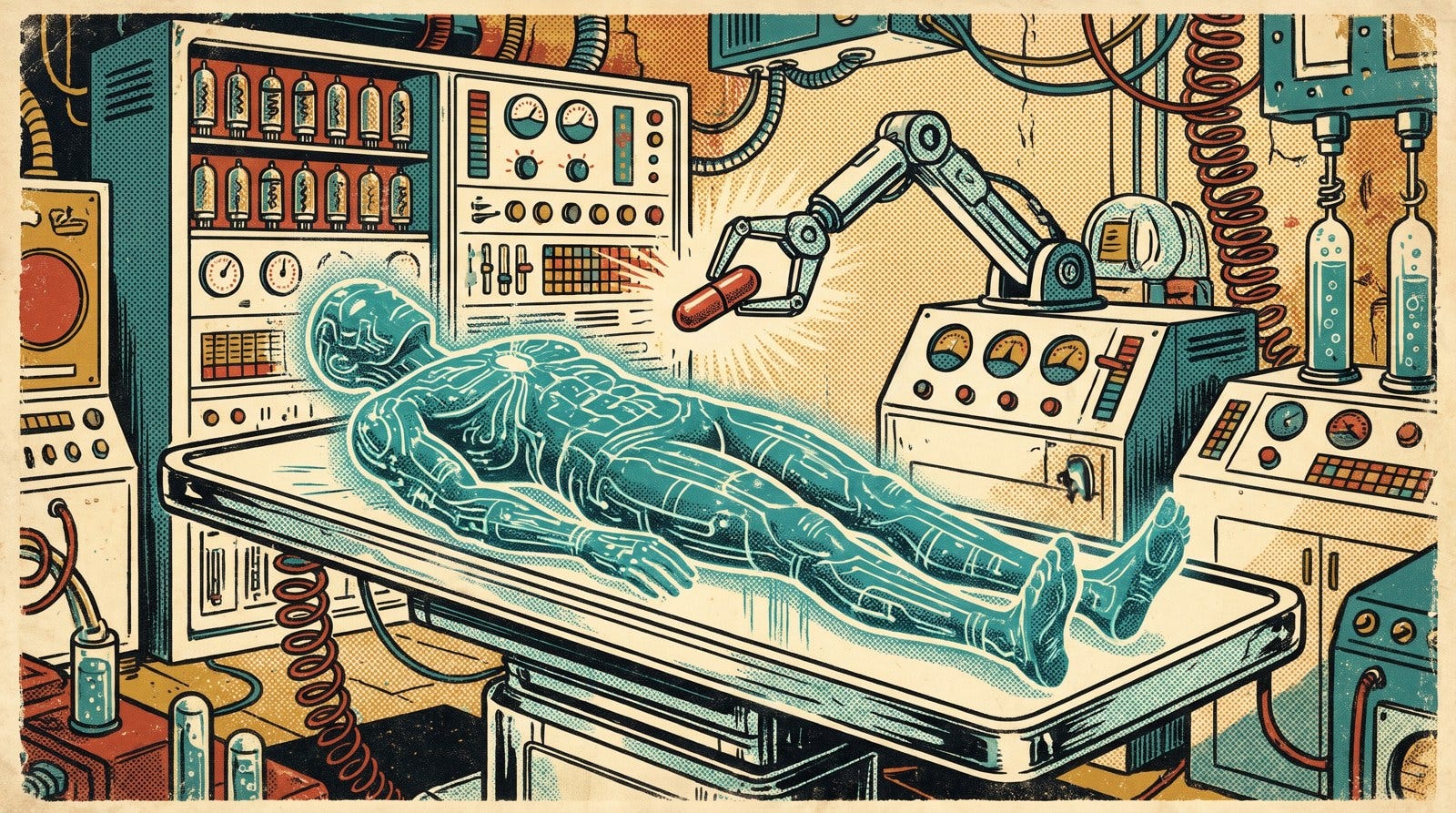
Before a new drug reaches a pharmacy, thousands of people test it, many on a dummy pill, over years. Drugmakers now want computer copies of patients to stand in for some of them. On Oct. 24 Boehringer Ingelheim, one of the world's 20 biggest drugmakers, and Microsoft said they will try to build "digital patient twins," starting with lung disease. A Copenhagen start-up says its virtual patients correctly called 5 of 6 drug trials before the results came out. If models like these prove reliable, fewer sick people would take a placebo, failing drugs could be dropped before anyone is dosed, and good drugs could arrive years sooner. None of that has been proven yet: no regulator has let a computer stand in for real patients in a final trial.
A story we are following. If computer copies of patients prove out, nearly every biology timeline on this site could move earlier: new drugs, gene therapies and anti-aging treatments all wait on human trials. Every development here gets its own post, and our odds elsewhere will move with it.
Below the line, for paid subscribers: The full story: where it stands, how we got here and what's dated next; our Odds board on 4 milestones, starting with "A new drug is approved in the U.S. or Europe with a digital-twin comparison group standing in for placebo patients by 2031"; our labeled speculation on what it adds up to; and every source.