


TL;DR
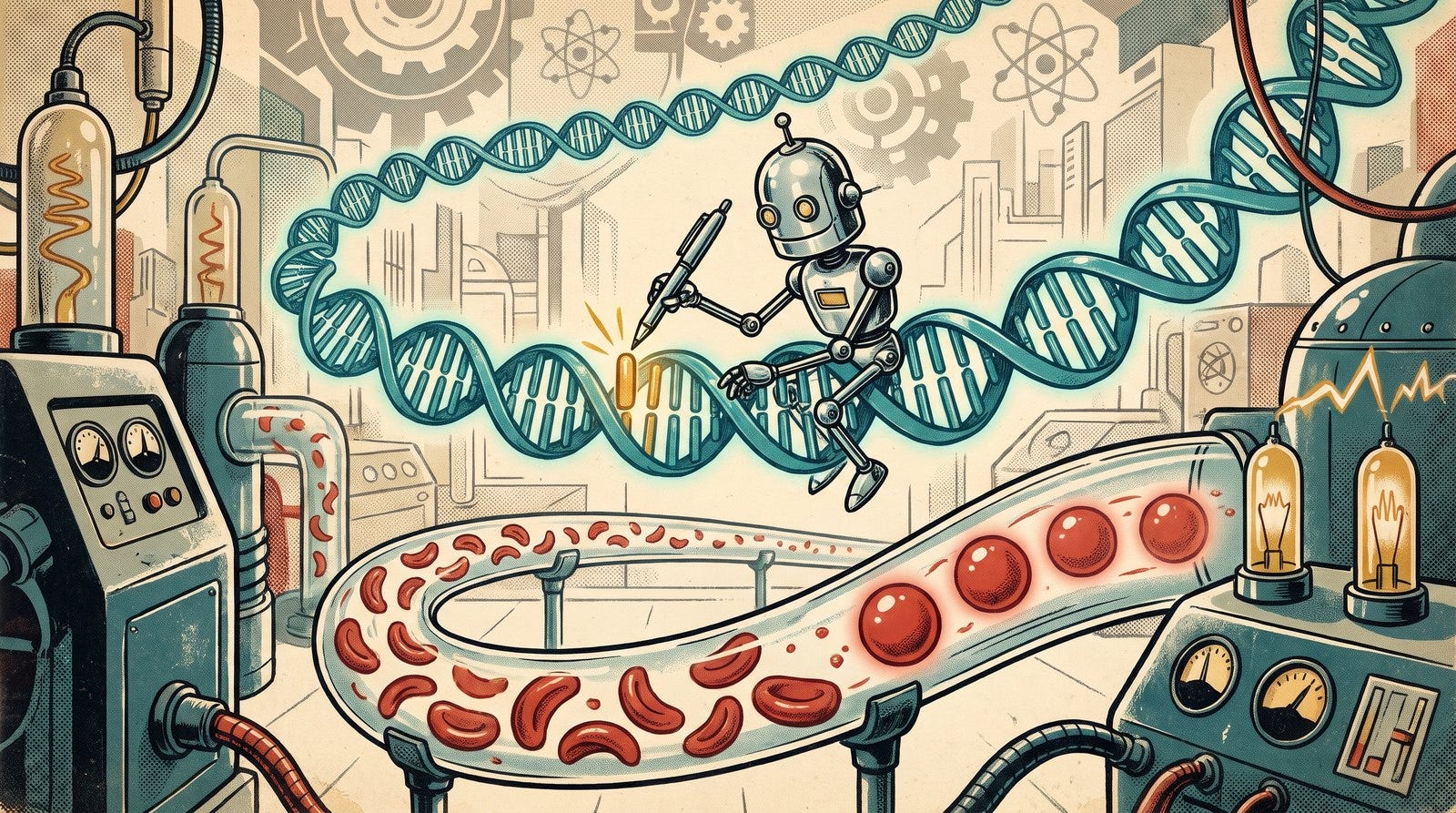
Sickle cell disease comes down to one misspelled letter in the gene for hemoglobin, the protein that carries oxygen in red blood cells. The treatments approved so far work around that typo: they switch on a backup, fetal form of hemoglobin or knock out a gene to get there. Kamau Therapeutics is trying something more direct. Its therapy, nula-cel, corrects the misspelling itself in a patient's own blood stem cells, and the company now reports its first results from more than one patient: in the two followed longest, normal adult hemoglobin made up 76.8% and 66.8% of all hemoglobin, roughly three-quarters and two-thirds, and more than 9 in 10 red cells carried protective hemoglobin that resists sickling. That is a company report on three patients treated with the newer version, with full data due at a major blood meeting on Dec. 14. A disease defined by a single wrong letter now has a treatment in testing that puts the right letter back. To see our odds on when a gene-correcting sickle cell therapy reaches patients, and the timeline of breakthroughs that leads there, subscribe.
Below the line, for paid subscribers: The full story: where it stands, how we got here and what's dated next; our labeled speculation on what it adds up to; and every source.