


Tuesday, Nov. 3, 2026 · about a 5-minute read
Good morning. Most of the effort to clear the body's worn-out cells has meant taking a pill again and again. Today's big one asks a bolder question: what if the immune system could be taught to do the job itself?
The big one
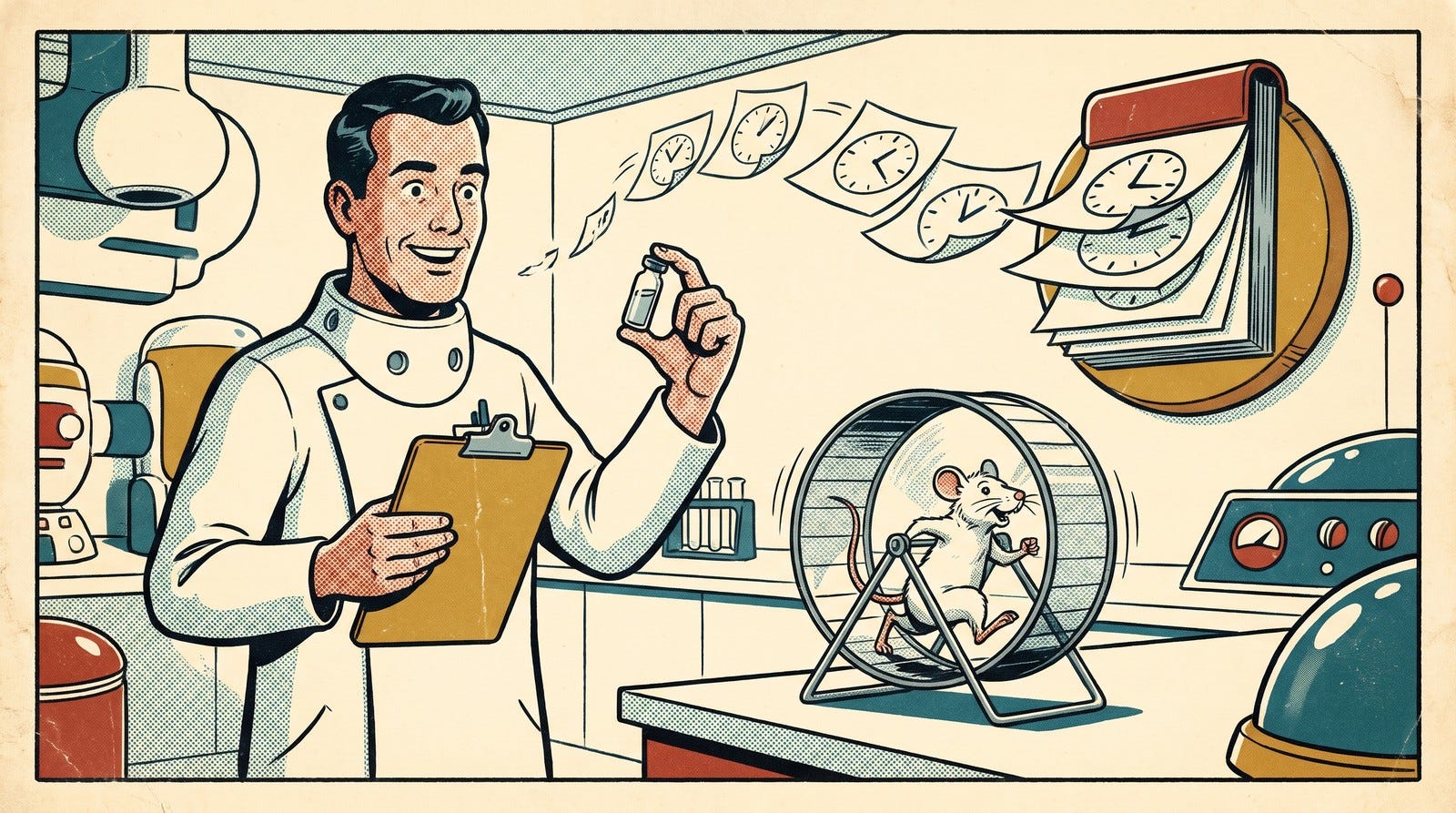
A Vaccine Against Aging Itself? Old Mice That Got One Lived 12% Longer. Bodies pile up "zombie" cells that stop dividing but won't die, and they leak signals that wear down everything around them. A Chinese research group built a shot that trains the immune system to hunt them. Old mice that got it lived 12% longer at the median, handled blood sugar better and carried less liver fat, in groups of about 10.
Why it matters: a vaccine would turn zombie-cell clearing from a lifelong prescription into a booster shot. Our odds that a vaccine against zombie cells is approved for an age-related disease: chance it works 40%, likely by 2038. Read it →
Yesterday on the site
The End of Aging
Shutting Off One Enzyme Could Mean a Longer, Sharper Old Age: old mice fed a blocker of one enzyme lived about 17% longer, and were stronger and sharper while they did it.
A Chill Pill for Long Life? Cold Worms Point to a Molecule That Could Bottle It: cold made worm muscle pump out a small molecule tied to longer life, the kind of lead that could someday fit in a pill.
The End of Disease
An Alzheimer's Drug Cleared Plaque but Didn't Slow Decline. Two New Approaches Report This Month.: one plaque drug is out, and the spotlight moves to a cortisol pill and tau drugs reporting in Boston this month.
Superhuman
Lab-Made Cells Could Reconnect Ears to the Brain: a company says it has made its first batch of lab-grown hearing-nerve cells to the standard needed for people, the part a cochlear implant can't replace.
Robots & Self-Driving
Robotaxis Mosey Into Cowtown: More Texans Can Now Hail a Self-Driving Tesla: Tesla says Fort Worth is its fourth Texas robotaxi city, and its wheel-less Cybercab heads out on a European tour.
Robot Companions Could Arrive in Homes in Late 2027. A $199 Deposit Holds a Spot.: the robots that talk and keep people company are going on sale ahead of the ones that fold laundry.
Limitless Energy
Japan and Germany Team Up to Create Endless Clean Power: two governments pledged to chase fusion together, and their companies started on the unglamorous parts a power plant needs.
Kentucky's Uranium Leftovers Could Become Fuel for Tomorrow's Reactors, Thanks to Lasers: regulators recommended licensing a plant that would turn an old pile of leftover uranium into fuel for the next wave of reactors.
Sci-Fi Tech
Hamburg to Copenhagen by Undersea Train Could Be Reality by 2035: the world's longest immersed tunnel is being sunk into the Baltic one giant concrete section at a time.
Supersonic Passenger Flights Are Still in the Works, and United Is First in Line: the airline first in line for Boom's faster-than-sound jet still wants it, on a later schedule.
By the numbers
28 months instead of 24: how long old mice lived on average when fed the enzyme blocker, about 17% longer.
20,000 kilometers: the superconducting magnet tape one German start-up needs for a single fusion demonstration machine.
18 kilometers: the length of the Fehmarnbelt tunnel, built from concrete sections cast on land, floated out and sunk into the seabed.
New on the odds board
Yesterday's posts put fresh odds on a drug that blocks the aging enzyme reaching its first human test, a pill that mimics cold exposure, a cell therapy that rebuilds the hearing nerve, Tesla's driverless rides spreading across the Sun Belt, companion robots reaching their first buyers, a stellarator power plant in Germany, America's first laser-enrichment fuel plant, trains under the Baltic, and paying passengers flying faster than sound. One moved: Boom's first Overture test flight slid a year later after United's chief executive said 2029 won't happen.
On the calendar
Nov. 4 to 7: the Gerontological Society of America's annual meeting in National Harbor, Md.
Nov. 5: Tesla's Cybercab opens a 12-stop display tour of Europe at Autoshow Zürich.
Nov. 7 to 8: NASA's quiet supersonic X-59 appears at the MAX POWER show at Kennedy Space Center.
Nov. 16 to 19: the Clinical Trials on Alzheimer's Disease conference in Boston, with results due for a cortisol-lowering pill and new tau-drug data.
The story we're following
Alzheimer's: in four days we've covered a federal prevention trial, blood tests that flag risk years ahead, and now a plaque-clearing drug that cleaned up brain scans without slowing decline. The field's next answers arrive in Boston, Nov. 16 to 19.
Quote of the day
"The only way of discovering the limits of the possible is to venture a little way past them into the impossible." — Arthur C. Clarke, science-fiction writer and futurist, in his 1962 book Profiles of the Future. Fusion plants, supersonic airliners and a shot against aging all started on the impossible side of that line.
Coming up
Today, a run of stories on rebuilding the face without the scalpel: surgery that heals without scars at 10 a.m., home-grown nose cartilage at 1 p.m., and a new way to fix tired-looking under-eyes at 4 p.m. Wednesday's big one: Plastic Surgery May Get an Undo Button, our next Some Assembly Required.
Until next time
That's today in the future. If someone you know would want to wake up to this, forward it to them, and if you're reading a forward, subscribe here. It's free every morning.