


TL;DR
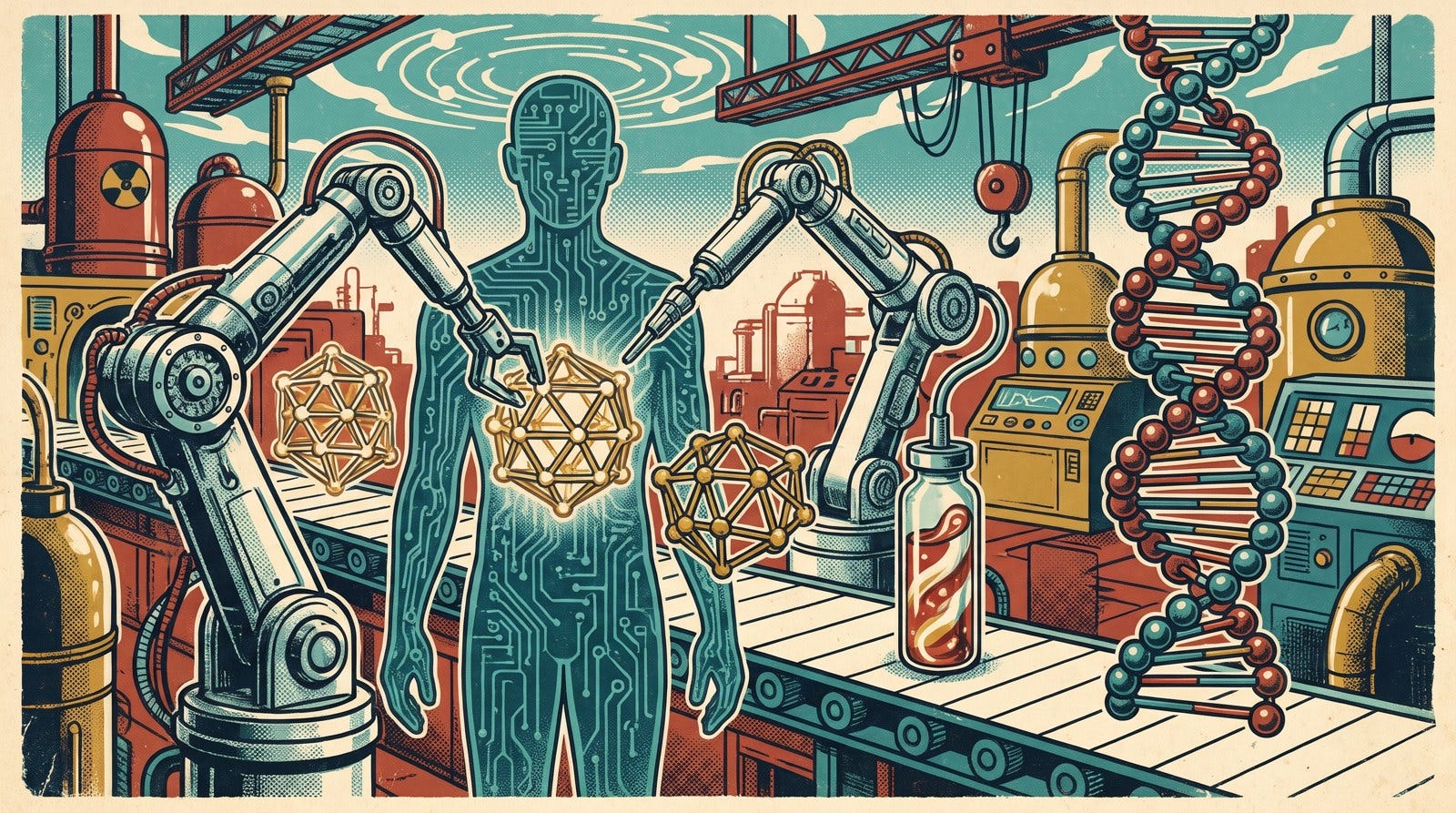
Making a new medicine takes more than a decade and up to $2 billion, and more than 9 in 10 candidates fail. Four pieces now exist, each in early form, that could one day squeeze the front of that process into weeks: an AI that designed lab-confirmed toxin-gripping proteins in 64 hours, computer copies of patients meant to forecast a drug's effect before anyone takes it, one-time gene edits that have held for a year, and gene tests that may show whom a pill helps and whom it harms. Snapped together, they would take a lab from a disease to a tested candidate, aimed at the right people, in weeks. For ordinary people that could mean treatments for rare diseases nobody bothered to make, fewer sick volunteers handed a dummy pill, and one dose in place of a lifetime of managing an illness. None of it fixes the slow part: proving in real people that a drug is safe and works.
Below the line, for paid subscribers: The full parts list with odds on each piece, and how they could snap together; our Odds board on 5 milestones, starting with "The whole machine: a drug designed by AI, screened on virtual patients and given to people a gene test picked is approved for patients by 2040"; what would change the odds and who is most likely to build it; and every source.