


TL;DR
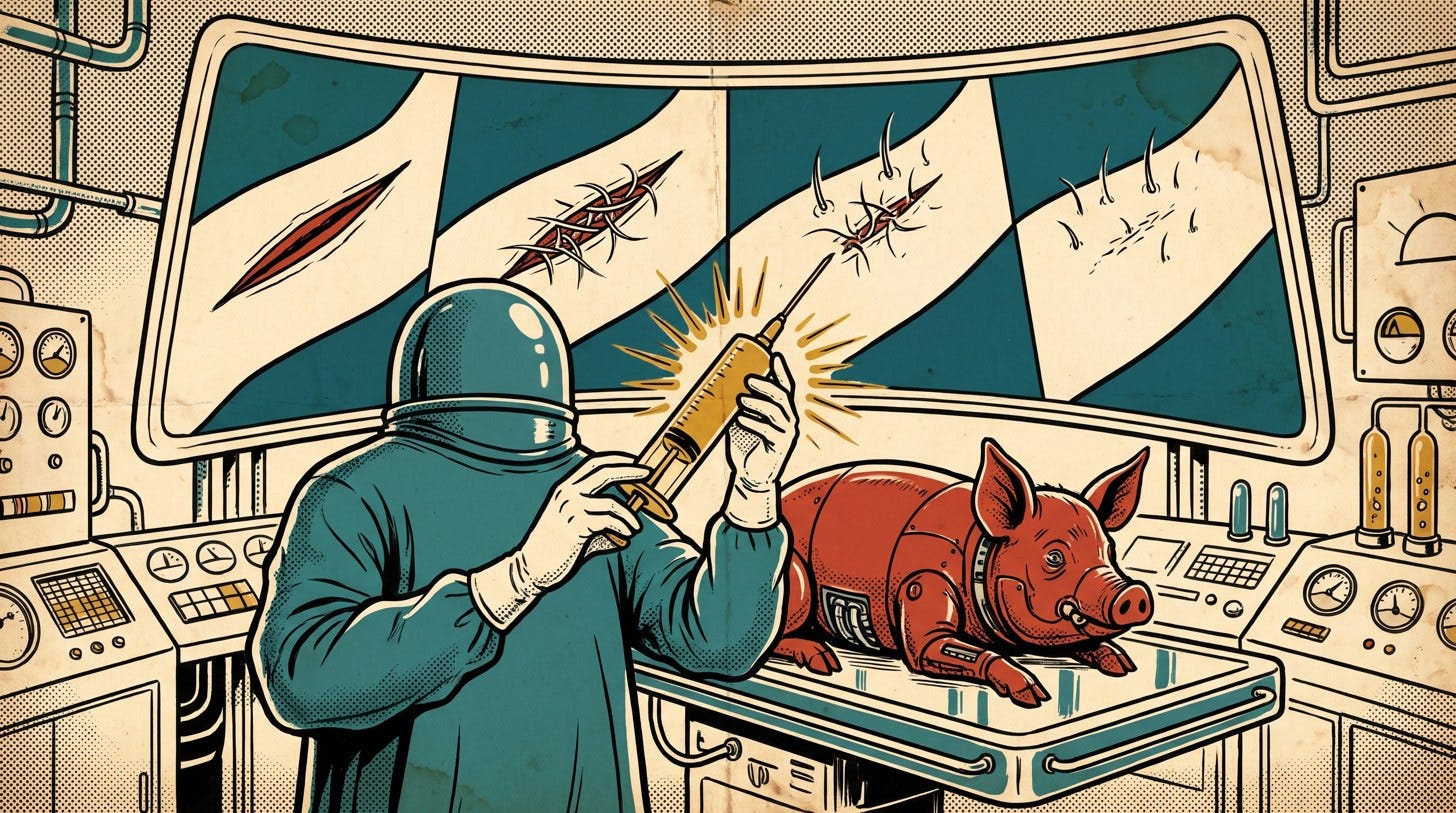
Almost every adult who has had surgery or a deep cut carries the receipt: a scar, a patch of stiff, weaker tissue with no hair and no sweat glands. Stanford researchers think scarring is not inevitable. It is a switch, flipped when skin around a wound is pulled tight, and an old eye drug called verteporfin can keep it from flipping. In mice in 2021, and in pigs with human-like skin in 2025, a shot of the drug at the moment of injury let wounds grow back as skin, hair follicles included, about as strong as skin that was never cut. Now the idea is moving into people: a Danish hospital lists a 12-person trial in tummy-tuck patients as recruiting as of October 2026, and a Swiss team has registered a second. There are no human results yet. If they come through, a scar could someday be something surgeons prevent on purpose rather than something patients simply live with. Our odds that a scar-blocking drug is approved for surgical wounds: 55%, likely by 2034. To read how we reached those odds and the timeline of trials that could make scar-free surgery real, subscribe.
Below the line, for paid subscribers: The full story: where it stands, how we got here and what's dated next; our labeled speculation on what it adds up to; and every source.