


TL;DR
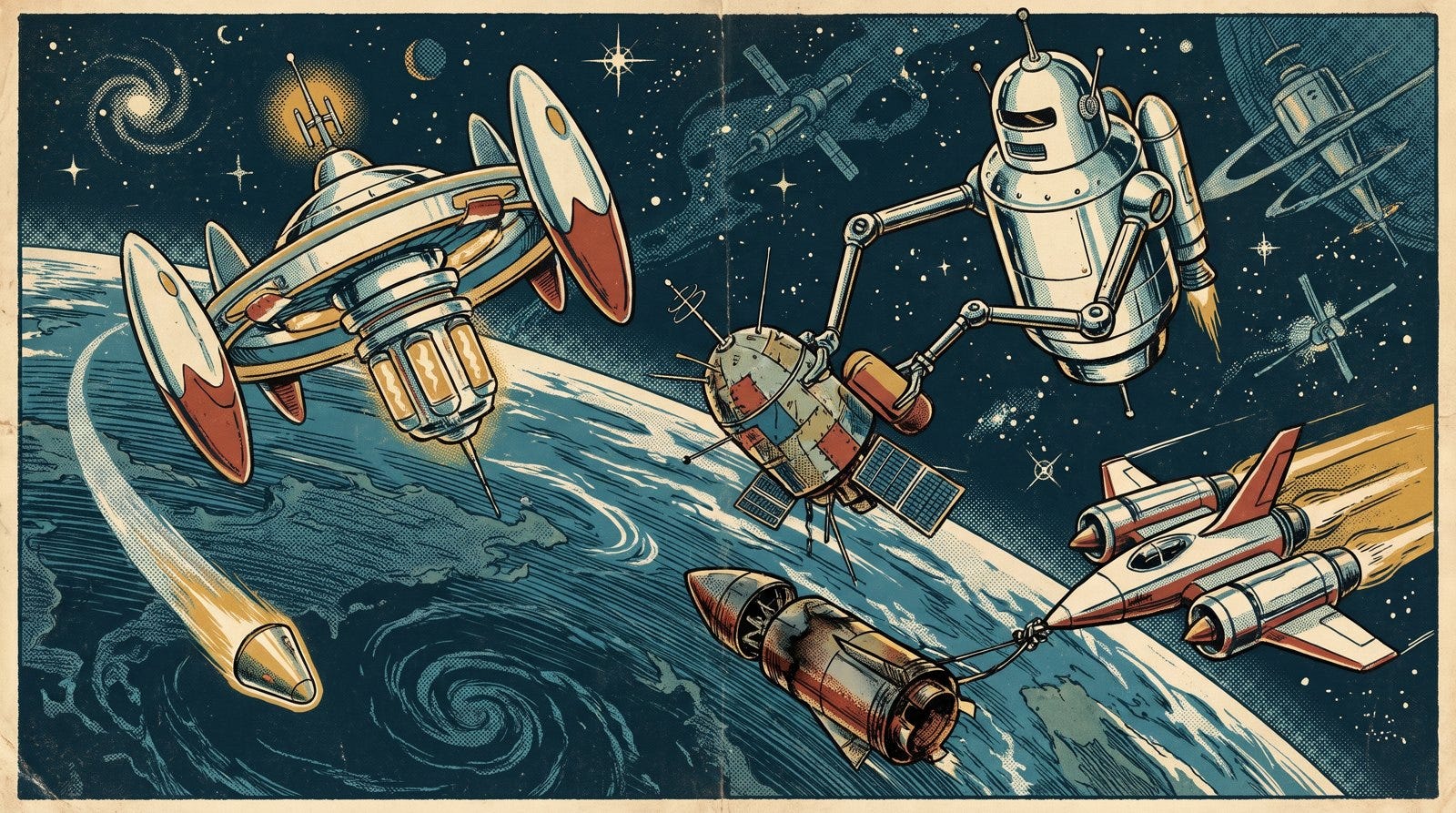
When a satellite runs low on fuel or breaks down, it usually becomes junk. That is starting to change. A robot mechanic carrying three strap-on fuel "jetpacks" is now climbing toward the high orbit where the world's big communications satellites live, a small servicing craft built to grab satellites that were never designed to be grabbed reached orbit on Oct. 1, a refueling tanker for the Space Force is built, a Japanese debris hunter has its rocket booked, and capsules have already made medicine crystals in orbit and landed them on Earth. NASA's new 368-page field guide to building and fixing things in space shows how fast the field has grown, and it admits only hardware that actually exists. For people, this is the start of an orbit that works like a highway: places to fill up, crews to fix breakdowns, tow trucks for wrecks, and eventually construction crews for stations and telescopes too big for one rocket. Our odds that a robot straps a fuel pod onto an aging satellite are 92% that it works, likely by 2027. For the full odds on refueling, debris removal and space factories, and the timeline of who gets there first, subscribe.
Below the line, for paid subscribers: The full story: where it stands, how we got here and what's dated next; our labeled speculation on what it adds up to; and every source.