


TL;DR
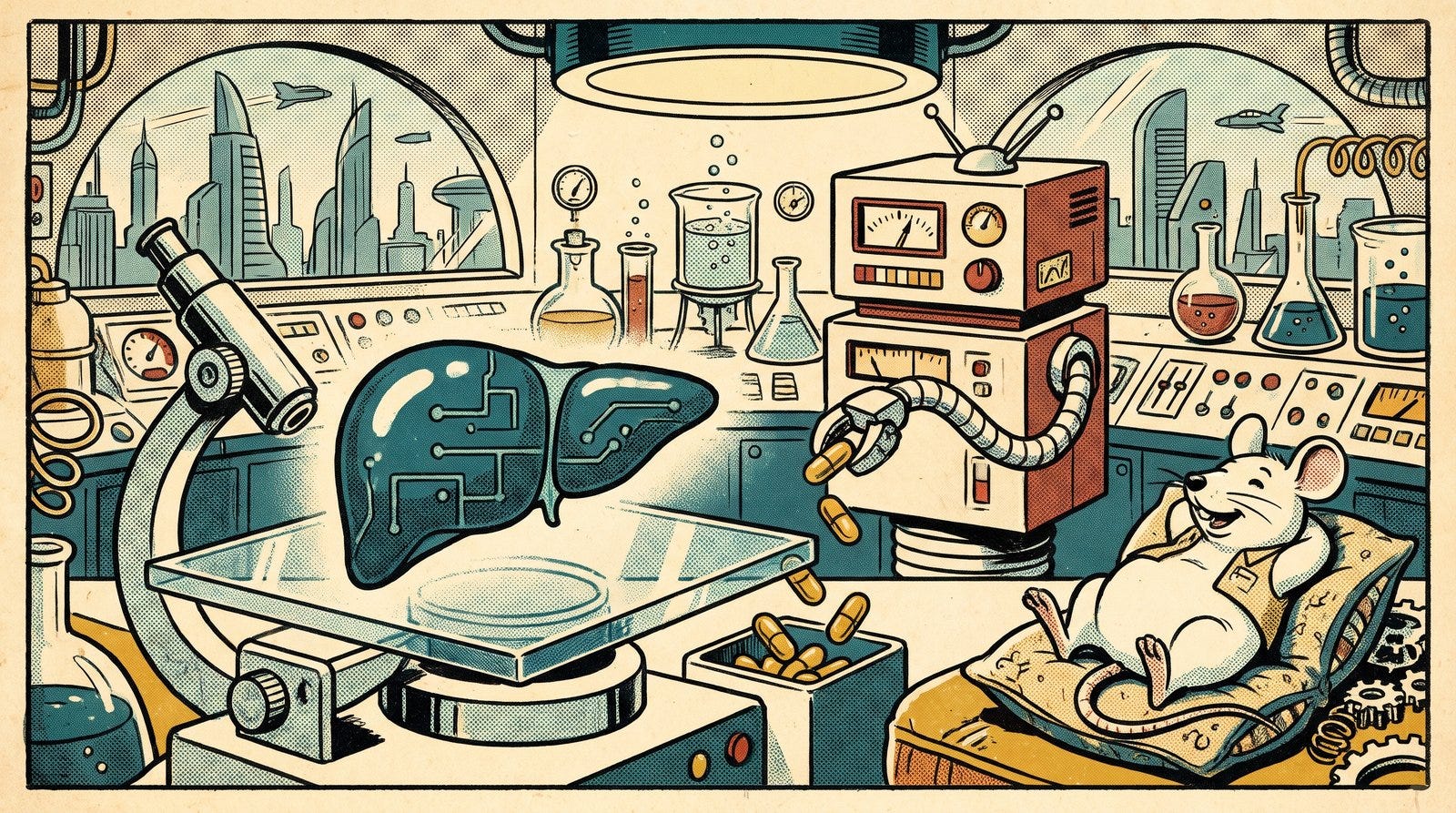
Before a new medicine reaches people, it is usually tested on animals, and animals are a shaky guide to what a drug will do to a human liver. Now a San Diego company, VivoSim Labs, says its lab-grown human liver tissue spotted liver-damaging drugs correctly 91% of the time across 92 drugs whose effects were already known, and it is about to start screening brand-new molecules designed with A.I. by its partner, Chemveda Life Sciences. Those numbers are the companies' own. The idea is a faster, tighter loop: design a drug, make it, test it on human tissue in about two weeks, and fix it while that is still cheap. A Nov. 2 review from Zhejiang University lays out how far these human-tissue and A.I. stand-ins have come, and which jobs they cannot do yet. This is a story we are following, because test subjects that are neither people nor animals could speed up almost every drug and therapy timeline we track. To see our odds on when animal tests start giving way, and the timeline of breakthroughs that leads there, subscribe.
Below the line, for paid subscribers: The full story: where it stands, how we got here and what's dated next; our labeled speculation on what it adds up to; and every source.