


TL;DR
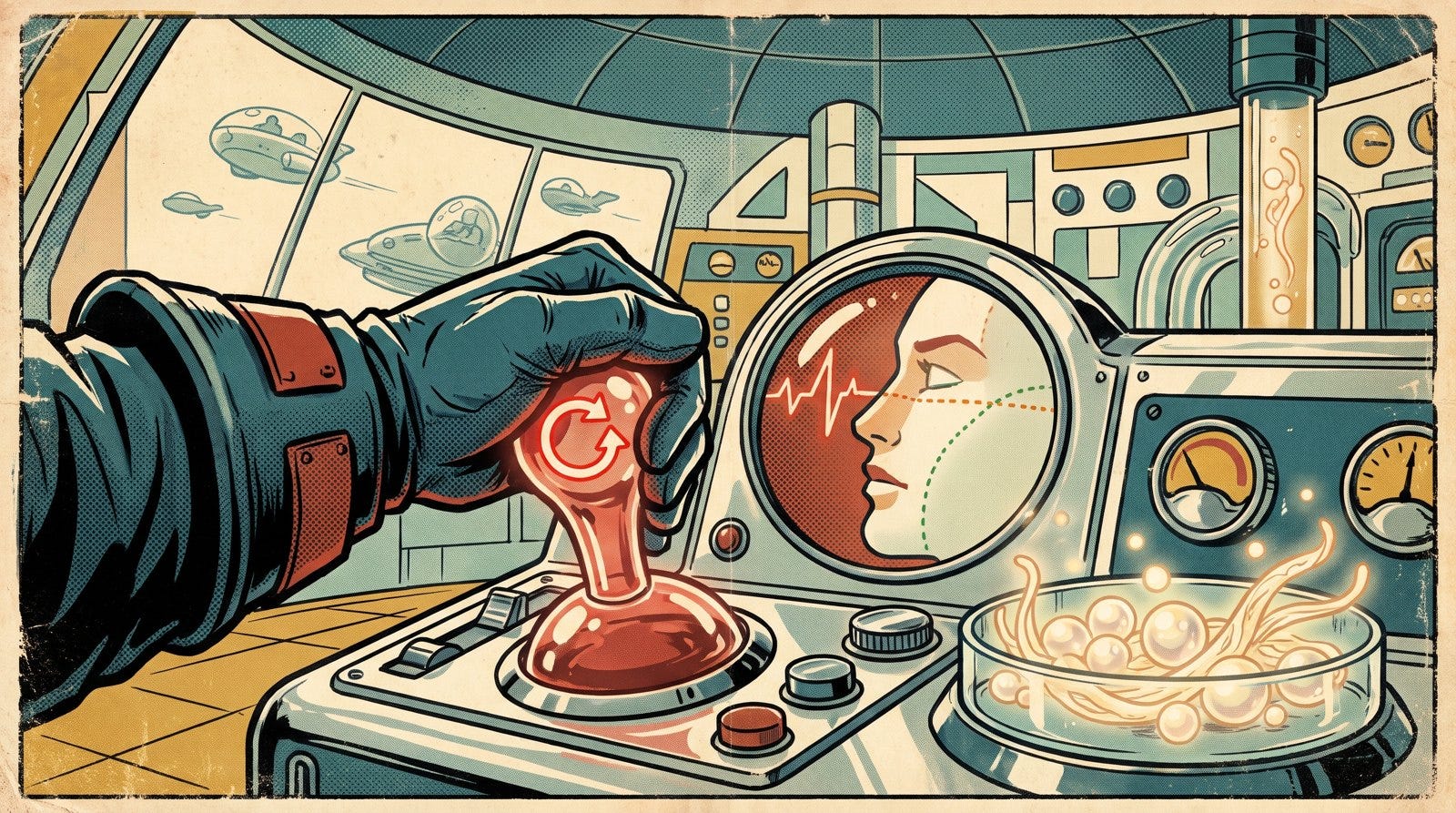
Cosmetic surgery has almost no undo button. Hyaluronic-acid filler can be melted with an enzyme and implants can come out; nearly everything else means another operation and another scar. But parts for a real undo are turning up in labs working on other problems. At Stanford, a single injection of an old eye drug at the moment of wounding let pig skin heal with new hair follicles instead of a scar, and a Danish trial is now testing it in tummy-tuck incisions. In Basel, surgeons rebuilt the noses of five skin-cancer patients with cartilage grown from a pinch of each patient's own septum. A shot meant to rebuild hollow under-eyes is cleared for a 75-person trial, and skin-rejuvenating creams are in human tests. Together they sketch a future where an unwanted result is removed, the site heals without a scar and the person's own tissue grows back. So far the scar drug has worked in animals and the grown cartilage in five people, and nothing yet dissolves permanent filler. Put together, our odds that a cosmetic surgery is reversed with the person's own tissue, scar-free: 45%, likely by 2041. Subscribe for a breakdown of those odds and a timeline of the steps toward a scar-free undo.
Below the line, for paid subscribers: the four parts of a cosmetic undo button and how far each has gotten, our speculative step-by-step assembly, the odds for every piece and the whole machine, what would move them, and who is best placed to build it.