


TL;DR
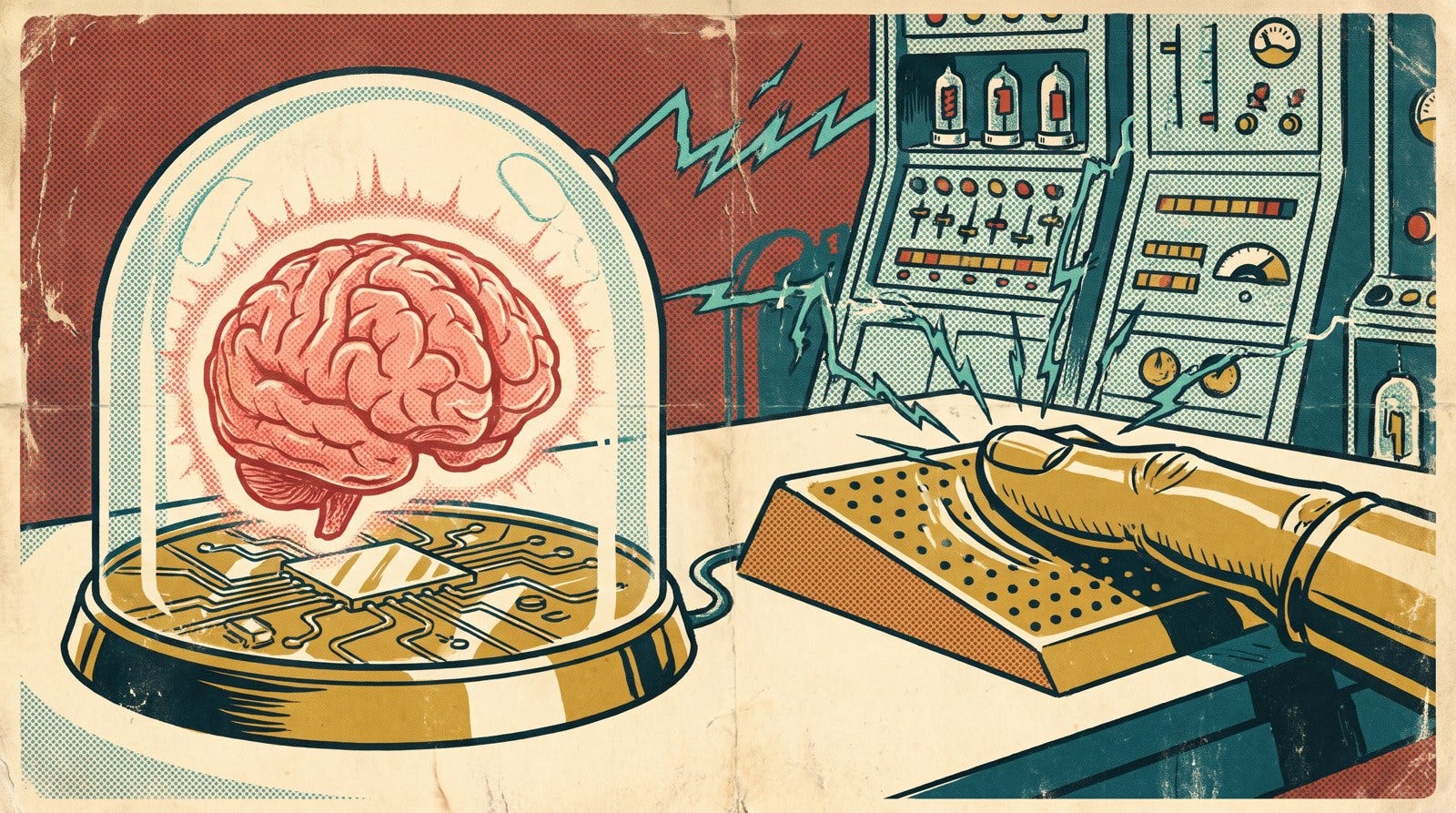
Scientists grew tiny balls of living human brain tissue, each about the size of a pinhead, set them on electrodes and fed them the bumps of Braille letters as electrical pulses. Reading the tissue's responses, an ordinary computer program picked the right letter about six times in ten with one mini-brain and better than eight times in ten with three working together. Living human brain cells are starting to do part of a computer's job. That could one day become a new kind of computer, built from tissue instead of silicon, and it puts living human cells inside a machine. For now it is a lab demonstration: nothing here learns on its own, nobody knows how to keep the tissue alive at scale, and one reasonable estimate puts practical machines of this kind around 2040.
Below the line, for paid subscribers: The full story: where it stands, how we got here and what's dated next; our Odds board on 4 milestones, starting with "Brain-organoid computers are in practical commercial use by 2040"; and every source.