


TL;DR
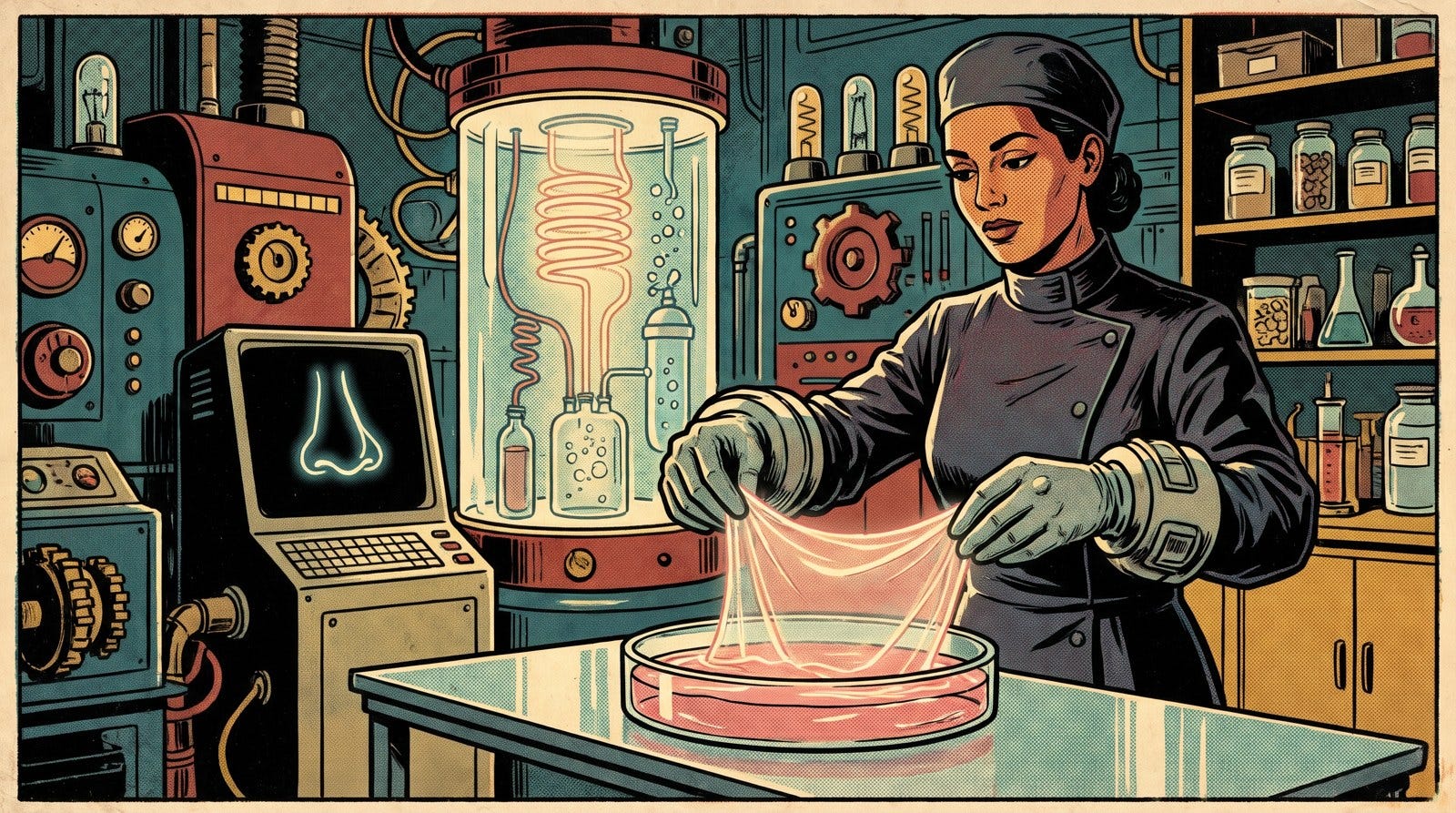
When surgeons rebuild a nose after skin cancer, or an ear for a child born without a full one, they usually borrow cartilage from somewhere else in the body, often the ribs, and carve it by hand. A Swiss team at University Hospital Basel has shown a different way works in people: take a pinch of cartilage from inside the nose, grow it into a sheet of new cartilage in the lab, and use that instead. It has rebuilt the sides of five patients' noses and patched holes in five others' nasal walls, with no serious problems. Ears have been harder. Two companies that 3D-printed ears from patients' own cells both stopped their trials early, the latest in November 2025, after a handful of patients each. And a September 2026 tally found that of 143 studies on printed or lab-grown ears, only nine reported anything in humans. The nose method is not yet approved anywhere, and it is now in trials with hundreds of patients, in knees, and a future where reconstructive surgeons order spare cartilage from a lab, grown from the patient's own cells, looks closer for noses than it did a decade ago. For the odds on lab-grown cartilage becoming standard and a timeline of the steps toward lab-grown ears, subscribe.
Below the line, for paid subscribers: The full story: where it stands, how we got here and what's dated next; our labeled speculation on what it adds up to; and every source.