


TL;DR
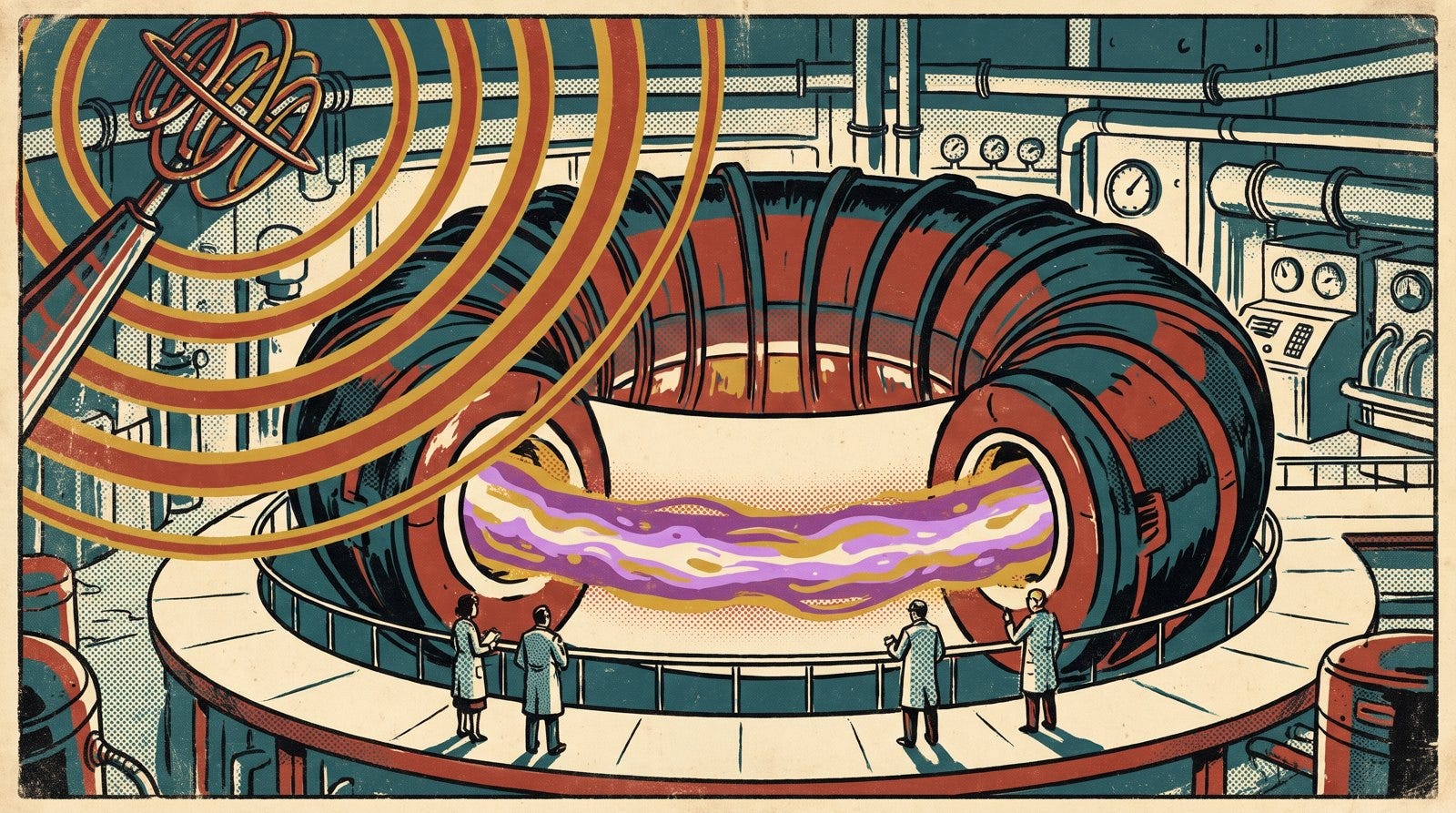
A power station has to run all day, every day, and the most studied fusion machine, the doughnut-shaped tokamak, naturally runs in pulses. A team working on the DIII-D machine in San Diego now reports the first experimental evidence that radio waves beamed in from outside can push the electric current that holds a tokamak's plasma together, the job that would let such a machine run steadily instead of in bursts. The push was small: about 20,000 amps, give or take 10,000, out of roughly 1 million, a slice of about 2%. Its own authors call it proof of principle at modest power. Still, it turns a long-proposed idea for future fusion plants into something that has actually been measured, and that is one more piece of the path toward fusion power that never has to stop.
Below the line, for paid subscribers: The full story: where it stands, how we got here and what's dated next; our Odds board on 5 milestones, starting with "DIII-D repeats the helicon current-drive test at higher power"; our labeled speculation on what it adds up to; and every source.