


TL;DR
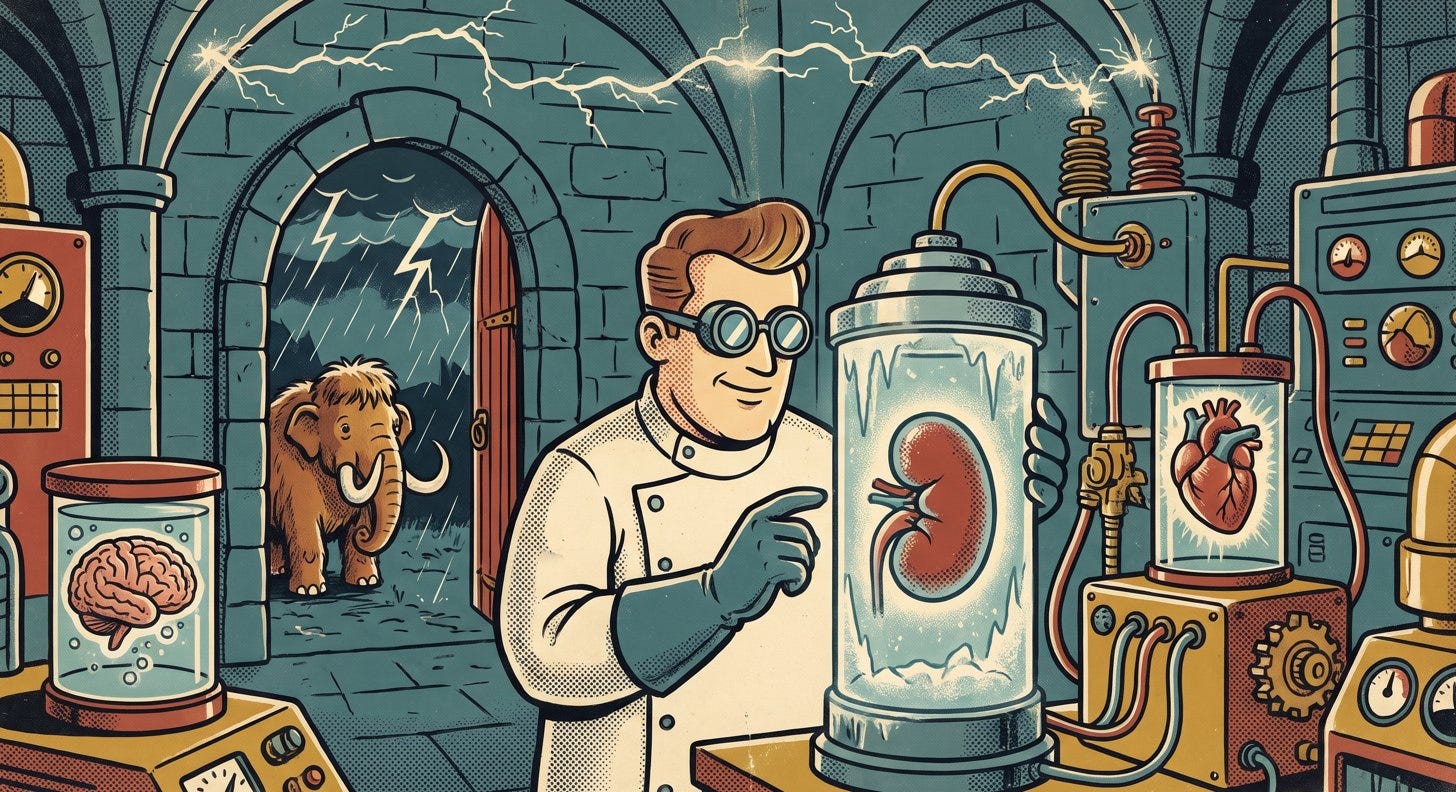
Victor Frankenstein had the right parts list and the wrong century. This Halloween, nearly every piece of his lab exists for real, scattered across universities and companies that have never compared notes. Minnesota researchers froze a pig kidney into glass for just over a year, warmed it back up, and it made urine. Gene-edited pig kidneys have kept people off dialysis for months, one man for 271 days, until a human kidney came. A Yale system restarted circulation and some cell function in pig organs an hour after the animals died. Harvard kept lab-grown human mini-brains alive for nearly six years. And a de-extinction company is breeding animals with the traits of lost species. None of it is a monster, and none of it brings anyone back to life. Put together, though, it sketches something far friendlier: a bank of frozen, revivable, made-to-order organs that could make the transplant waiting list a lot shorter.
Below the line, for paid subscribers: all five parts with their odds, our step-by-step speculation on how they snap together into a real-life organ bank, the odds for the whole machine and its bottleneck, what would change those odds, and who's most likely to build it.