


TL;DR
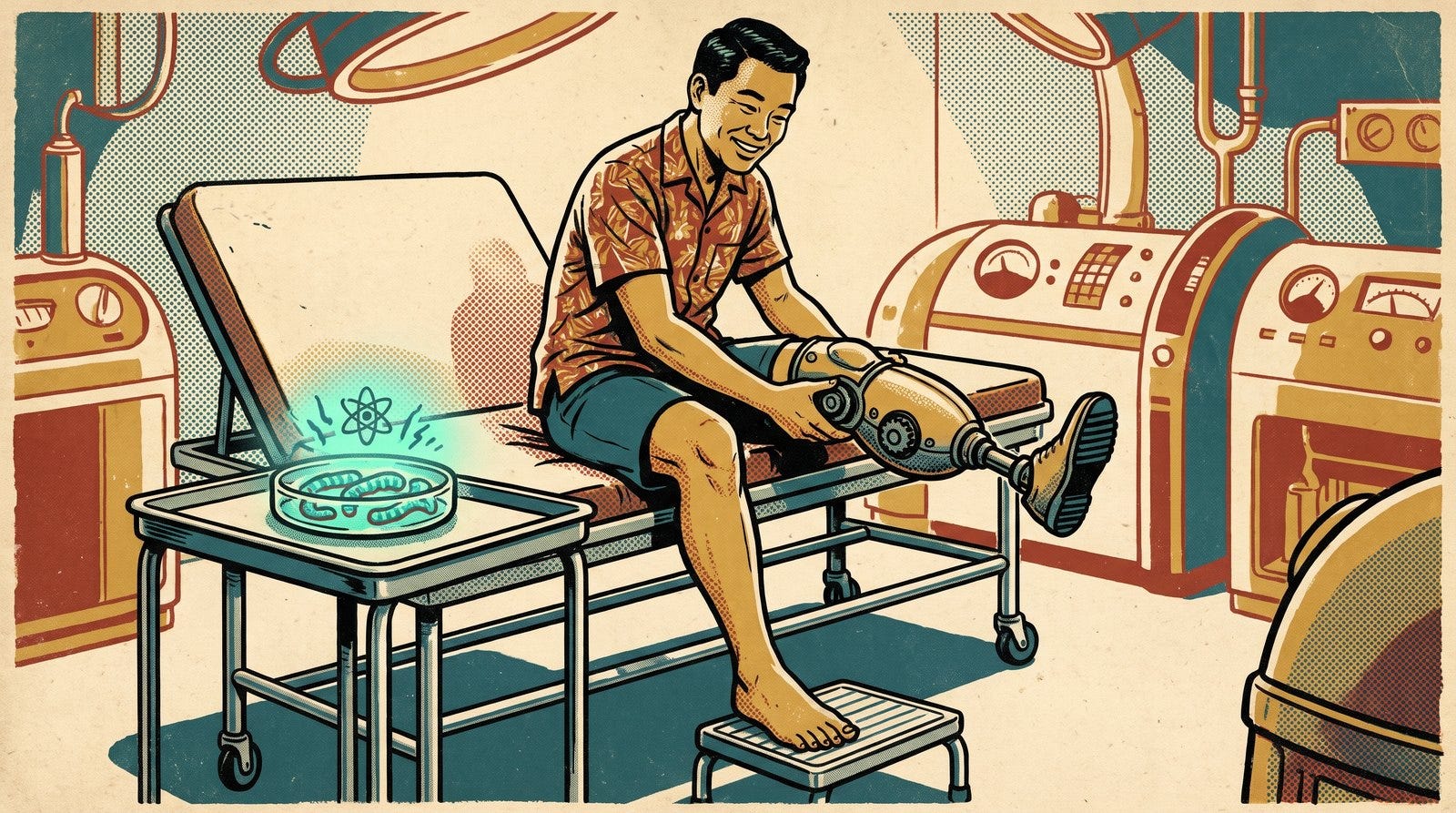
The skin on the soles of our feet is built to carry a whole body's weight all day. Johns Hopkins researchers wanted to know whether that toughness could be moved. They grew skin cells called fibroblasts from the soles of 10 healthy adults, injected them under ordinary skin elsewhere, and found that the treated patches became more like sole skin, thicker and more elastic, at two and five months, according to the university's release. The people who stand to gain first are the roughly 2 million Americans living with limb loss, whose prosthetic sockets rub the skin into sores and bruises; tougher skin where the socket sits could mean fewer of those sores. Further out, the same trick hints at tuning the thickness of a scar or of thin, aging skin, an idea still untested. Our odds on when a foot-cell treatment helps prosthetic wearers, and the timeline of breakthroughs that leads there, are below the line: subscribe to read them.
Below the line, for paid subscribers: The full story: where it stands, how we got here and what's dated next; our labeled speculation on what it adds up to; and every source.