


TL;DR
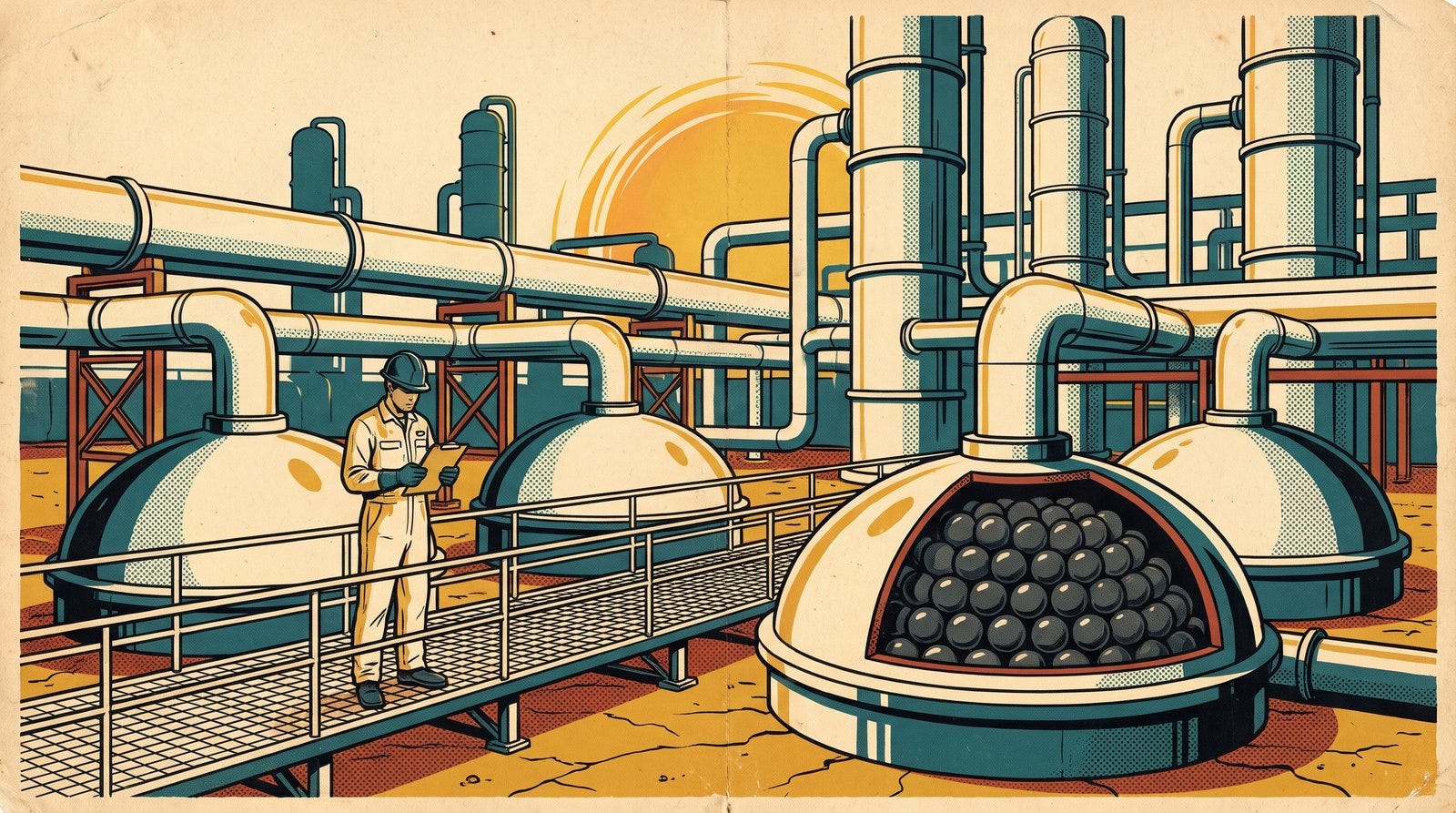
A chemical plant in Texas is on track to make its own power and heat from four small nuclear reactors on its own grounds. On Nov. 9 the U.S. Nuclear Regulatory Commission issued a construction permit for Dow's Long Mott project at its Seadrift, Texas, site: four reactors from X-energy that together make about 320 megawatts of electricity, roughly what a mid-sized city draws, plus the high-temperature steam a chemical plant runs on. The reactors use a design never permitted in the U.S. before: fuel packed into graphite pebbles the size of tennis balls, cooled by helium gas instead of water. The companies call it the first permit for a pebble-bed reactor, the first for a high-temperature gas-cooled reactor in nearly 60 years, and the first for a reactor on an industrial site. If it works, factories gain a way to make their own power and steam on site. Dow still has to make its investment decision, expected in 2027, and win an operating license, and first power is targeted for the early 2030s. To see our odds on when these reactors start making power, and the timeline of breakthroughs that leads there, subscribe.
Below the line, for paid subscribers: The full story: where it stands, how we got here and what's dated next; our labeled speculation on what it adds up to; and every source.