


TL;DR
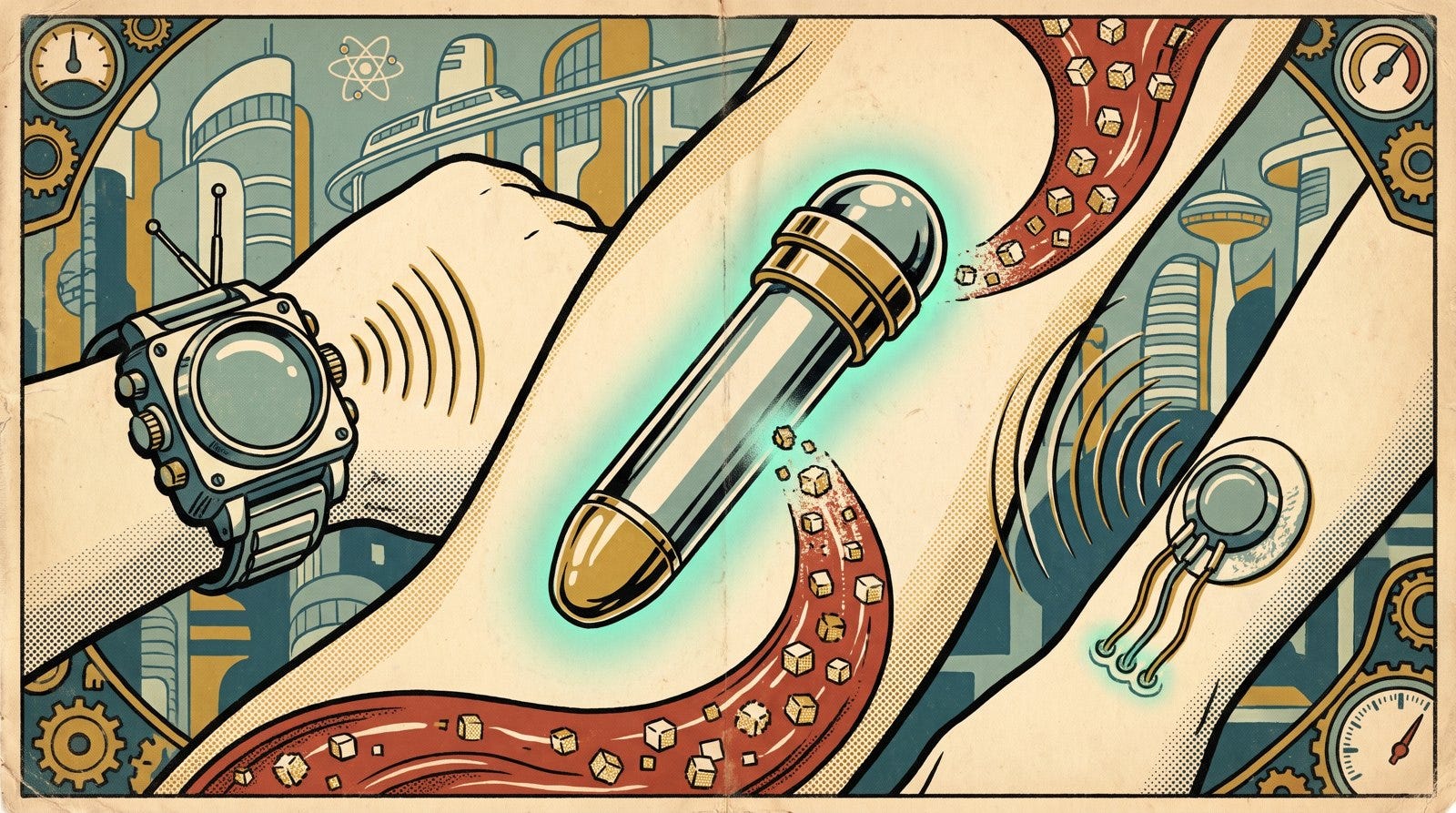
Most diabetes treatment works by persuading the body to handle sugar better: pills, injections and insulin, every day, for life. A team at ETH Zurich tried something blunter. They built a small implant that simply removes the extra sugar from the blood, turning it into a harmless compound the body flushes out in urine, and switches itself on only when blood sugar runs high. In mice with type 2 diabetes, it brought blood sugar back to normal within an hour, the animals lost weight, and it ran safely for six weeks, with no drug involved. The work was published Oct. 22 in Science. For the more than 2.5 billion people the authors count with type 2 diabetes and obesity, the hope is a future where a tiny device and a phone app do the job of a medicine cabinet. Human testing has not started yet; our odds that this kind of implant is first tried in a person: a 60% chance it works, likely by 2031. To see the full odds and the timeline of breakthroughs between a mouse and a pill-free patient, subscribe.
Below the line, for paid subscribers: The full story: where it stands, how we got here and what's dated next; our labeled speculation on what it adds up to; and every source.