


TL;DR
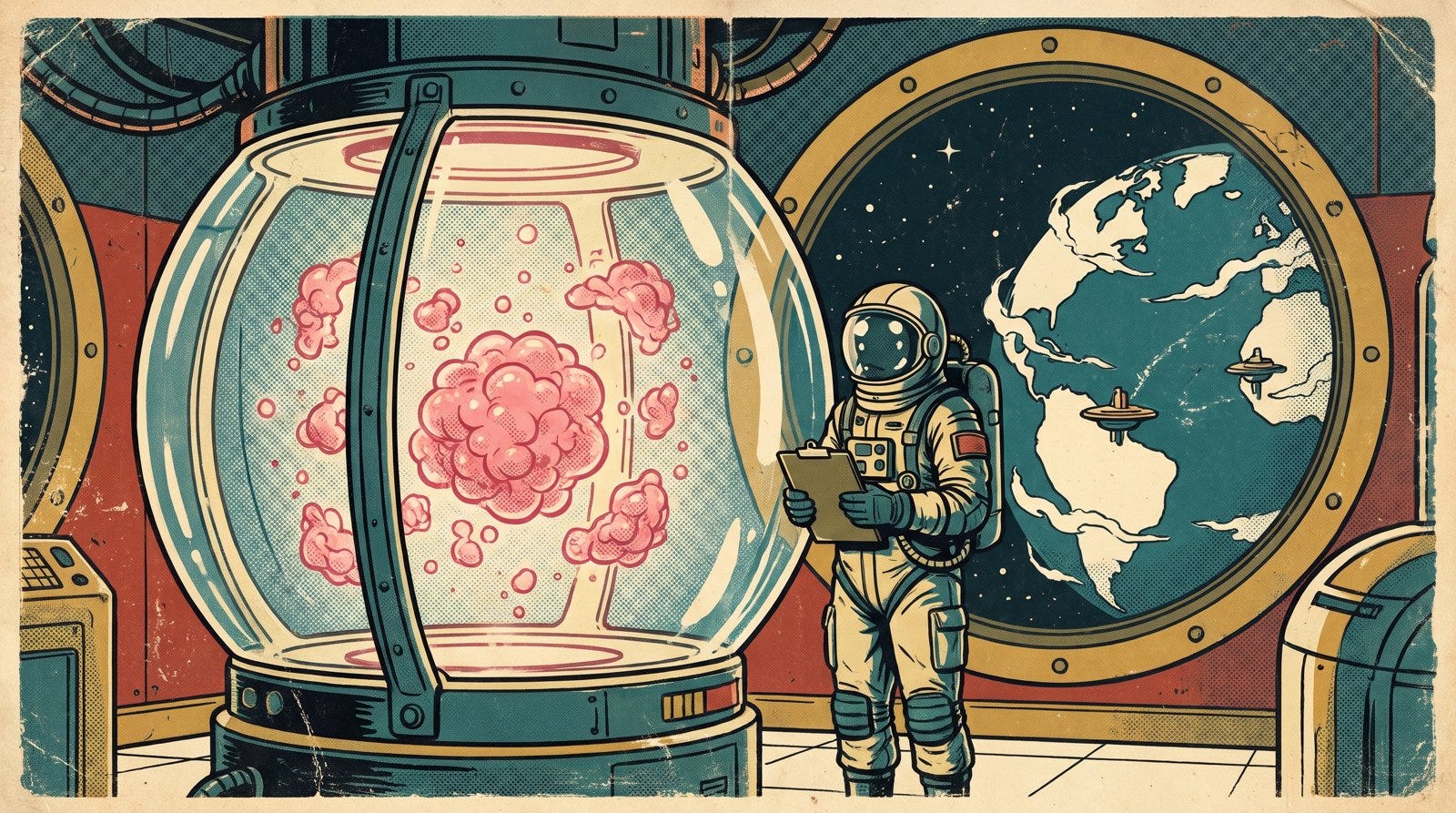
Before a cancer drug is ever given to a person, it is tried on stand-ins: cells, animals and, more and more, organoids, tiny lab-grown clumps of human tissue. The trouble is that stand-ins often behave too politely, and drugs that look good on them fail in people. A Notre Dame team now reports that mini-tumors of glioblastoma, the deadliest common brain cancer, grown for 40 days aboard the International Space Station came out looking more like the aggressive tumors patients actually have than the same tumors grown on Earth. If that holds up, weightlessness could become a tool for building tougher, more honest test subjects, and drugs that would have failed in a trial could be weeded out sooner. It is one study, read through a release summary, with no drug tested yet. Our odds that space-grown tumor organoids become a routine drug-screening step: 55%, likely by 2035. Subscribe to read how we reached those odds and the timeline of steps toward space-grown tumors in drug testing.
Below the line, for paid subscribers: The full story: where it stands, how we got here and what's dated next; our labeled speculation on what it adds up to; and every source.