


TL;DR
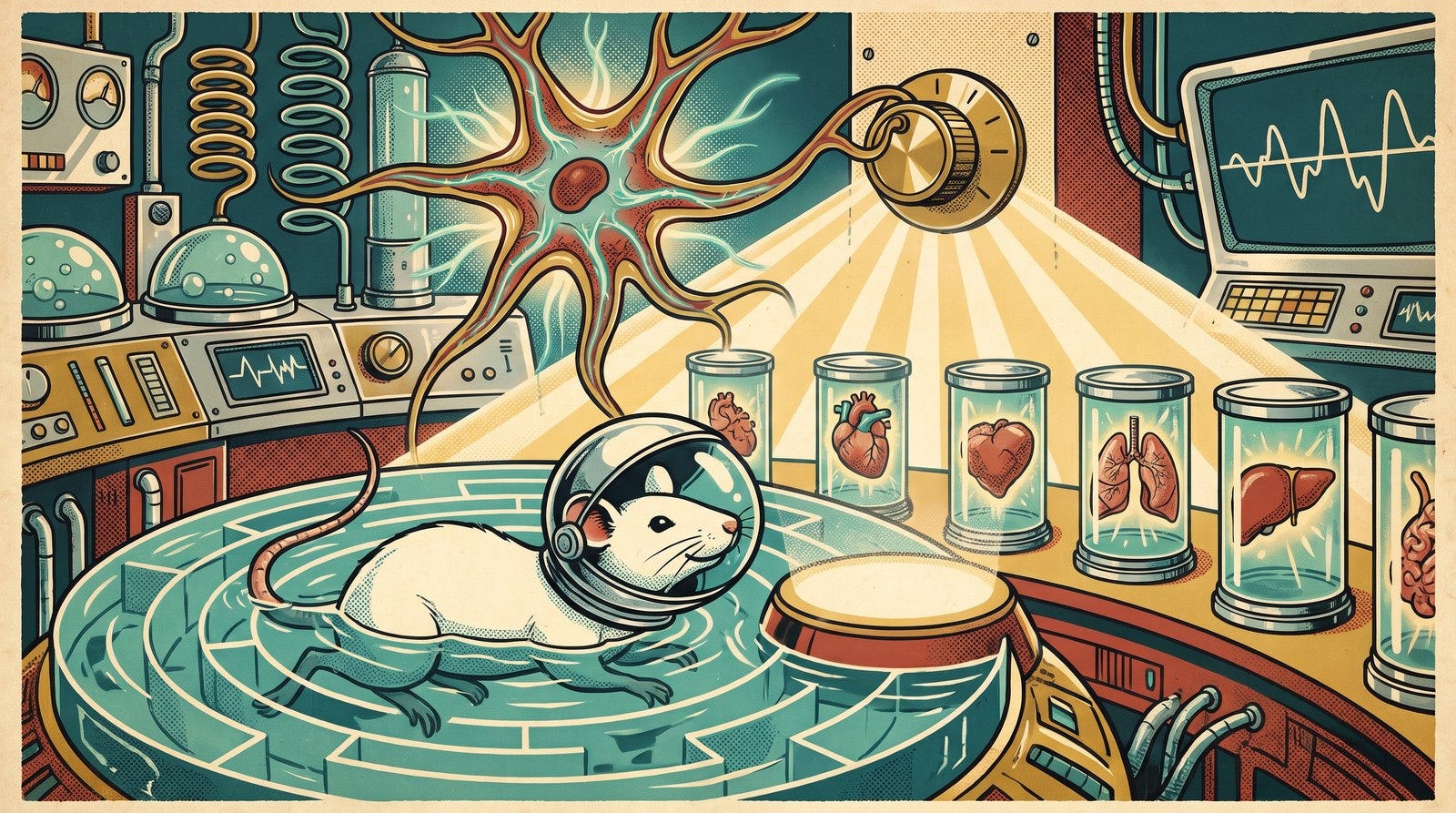
What if one of the levers for aging the whole body sits inside the brain? In a mouse study reported by Lifespan.io on Oct. 29, researchers raised a single protein, FGF13, in the brain's star-shaped support cells, and old mice did about as well as young ones on a water-maze memory test. The same treatment lowered inflammatory signals in the blood, trimmed markers of aging cells in the skin, liver, spleen and kidney, and kept the mice from putting on as much age-related weight. That makes FGF13 a new handle on a growing idea: that the brain may help set the pace for aging everywhere else. This is mouse work, reported secondhand, and human testing has not started; our odds that a brain-targeted treatment slows body-wide aging in a human trial are 40%, likely by 2040, provided the science comes through. To see the full odds and the timeline of breakthroughs that would lead from these mice to people, subscribe.
Below the line, for paid subscribers: The full story: where it stands, how we got here and what's dated next; our labeled speculation on what it adds up to; and every source.