


TL;DR
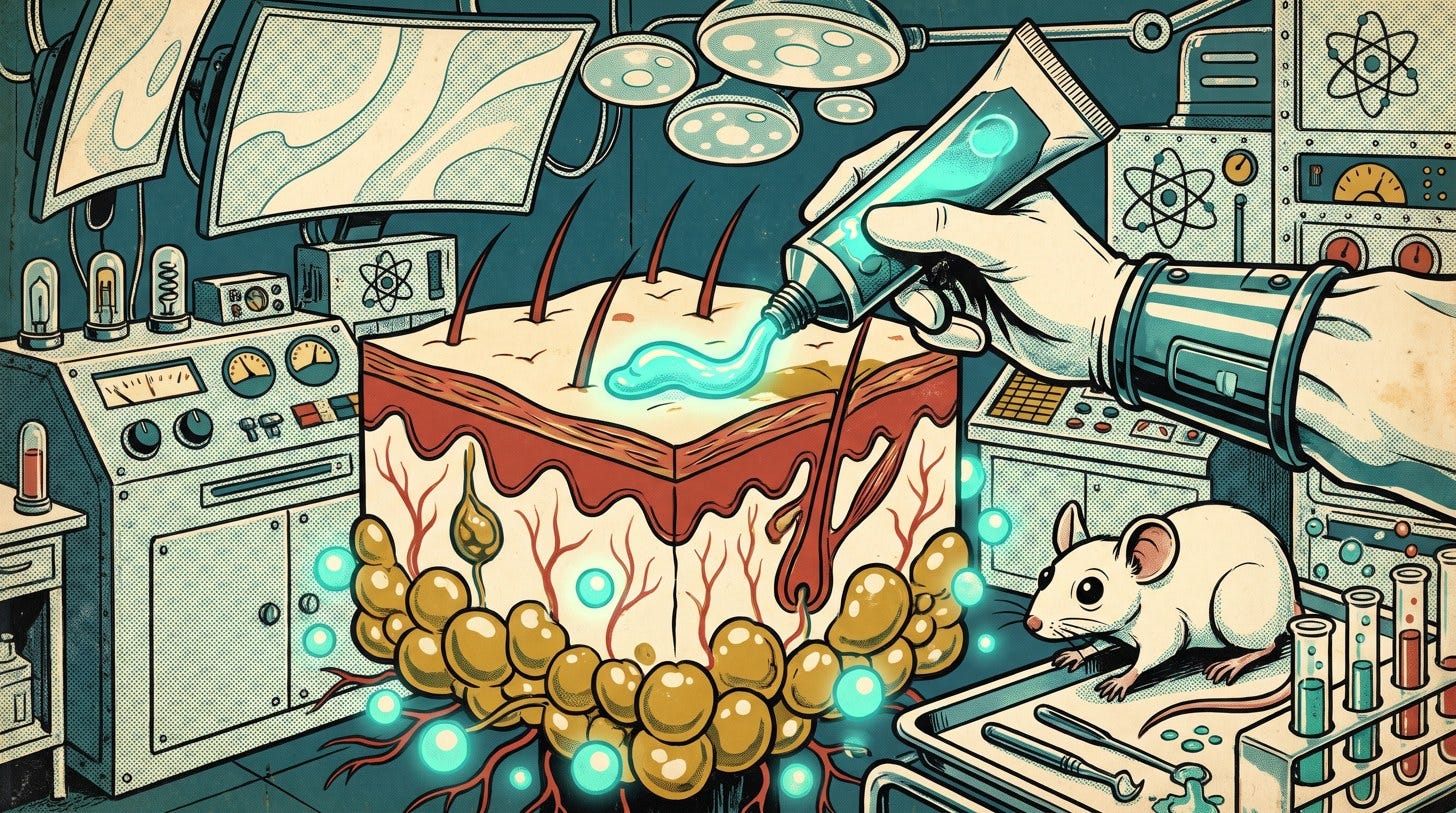
Moving a person's own fat from the belly or thighs to the face or breast is one of plastic surgery's most natural-sounding tools: no implant, no foreign material, nothing for the body to reject. Its catch is that a lot of the fat simply doesn't survive the move. Across dozens of studies, only about half of the grafted volume is still there months later, so people often need repeat sessions. Researchers have been asking whether a drug could help the transplanted fat take hold, and one family of old diabetes drugs keeps turning up as a candidate: drugs that flip on the body's master switch for making fat cells. In April 2026, a Harvard team at Brigham and Women's Hospital reported that a skin cream made from one of them, rosiglitazone, grew new fat cells and reduced scarring in radiation-damaged mouse skin. That work was in mouse skin, not a graft, and no one has yet tested such a drug on fat grafts in people. If the idea holds up, fat transfer could become something closer to a one-visit fix, with special promise for cancer survivors whose irradiated skin heals poorly. For the odds on a drug that keeps grafted fat alive and a timeline of the steps toward one-visit fat transfer, subscribe.
Below the line, for paid subscribers: The full story: where it stands, how we got here and what's dated next; our labeled speculation on what it adds up to; and every source.