


TL;DR
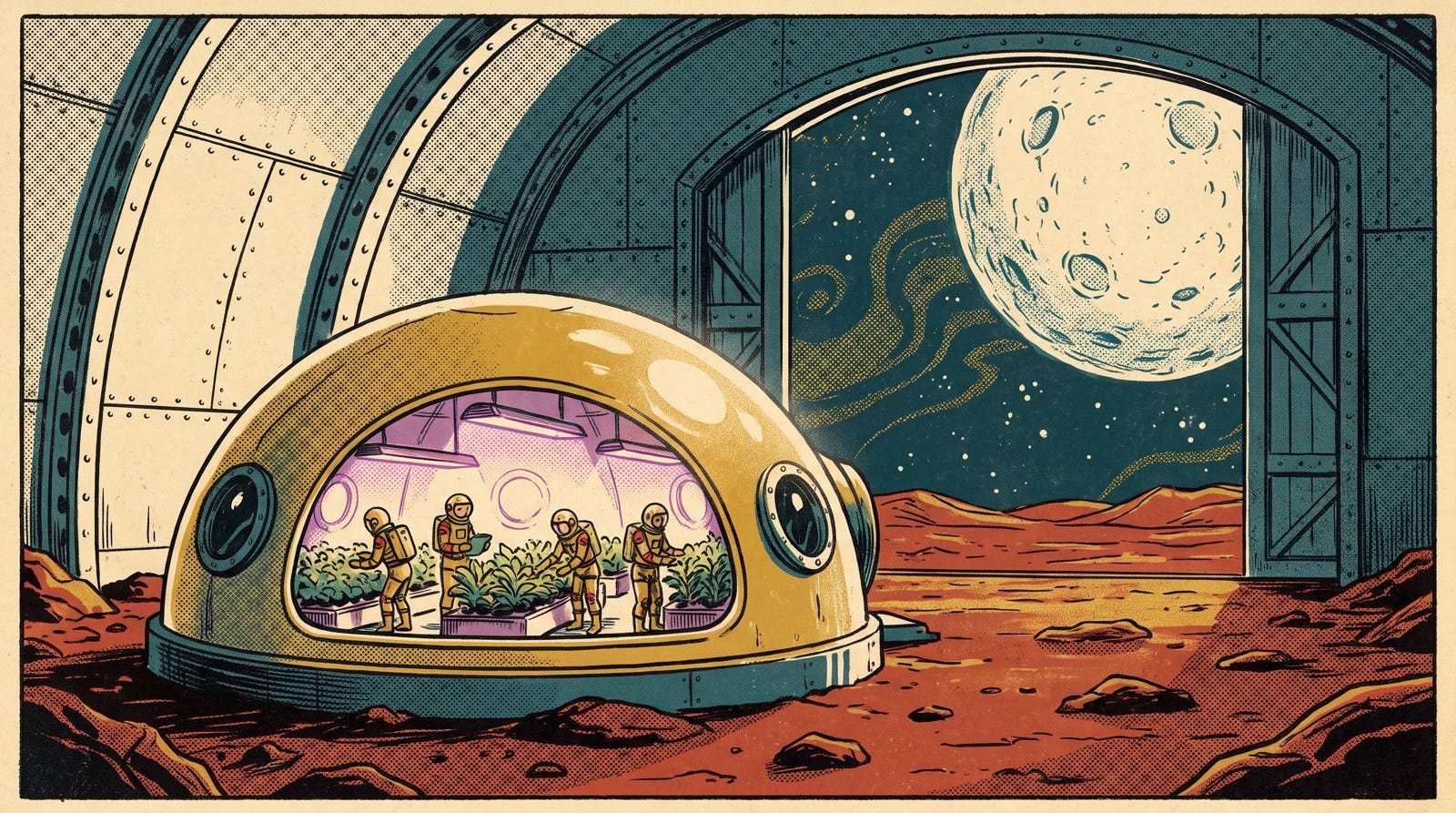
Four volunteers spent 378 days sealed inside a 3D-printed pretend Mars base in Houston, from Oct. 19, 2025, until they walked out on Oct. 31, 2026. They grew plants, fixed their own habitat, exercised and went on simulated spacewalks, all while their messages home crawled through Mars-style delays and their supplies stayed tight. The twist is where the lessons go first: NASA says the data will help plan missions to the Moon, from what crews eat to how they spend their hours and how they are kept healthy in body and mind. For people hoping to see humans living and working away from Earth, a year of practice on the ground is the kind of homework that makes long stays out there safer and more livable. To see our odds on the steps between this fake Mars and the real thing, and the timeline of breakthroughs that gets people there, subscribe.
Below the line, for paid subscribers: The full story: where it stands, how we got here and what's dated next; our labeled speculation on what it adds up to; and every source.