


TL;DR
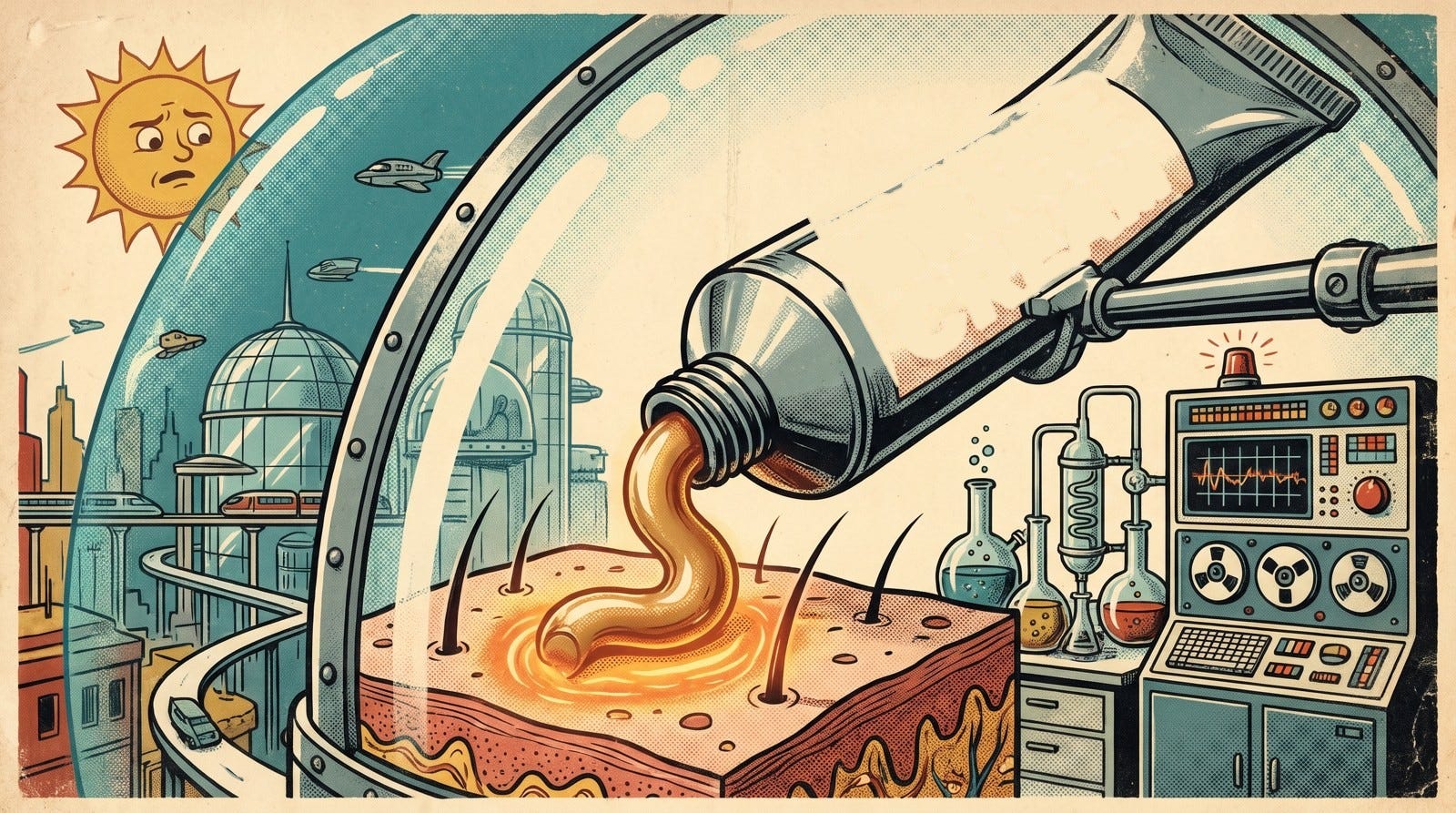
Since 2017, scientists have known how to give human skin a real tan, made of the body’s own pigment, without a minute of sunlight. A rub-on molecule darkened living human skin in a lab dish, and in red-haired mice it produced a tan that turned nearly jet black within a day or two. Nine years later, nobody has tested it in a person. A real tan is the skin’s own sun shield, so a safe one in a tube could mean fewer burns and, researchers hope, fewer skin cancers, not just a better look. What stopped it is a design problem: the molecule blocks enzymes the whole body uses. Designing around that kind of problem is what AI drug-design tools are getting good at, and the first AI-designed drugs are already in human trials.
Below the line, for paid subscribers: The full story: where it stands, how we got here and what's dated next; our Odds board on 5 milestones, starting with "Clinuvel’s tanning-hormone implant is approved for vitiligo in the U.S. or Europe by 2029"; our labeled speculation on what it adds up to; and every source.